Ice Balls
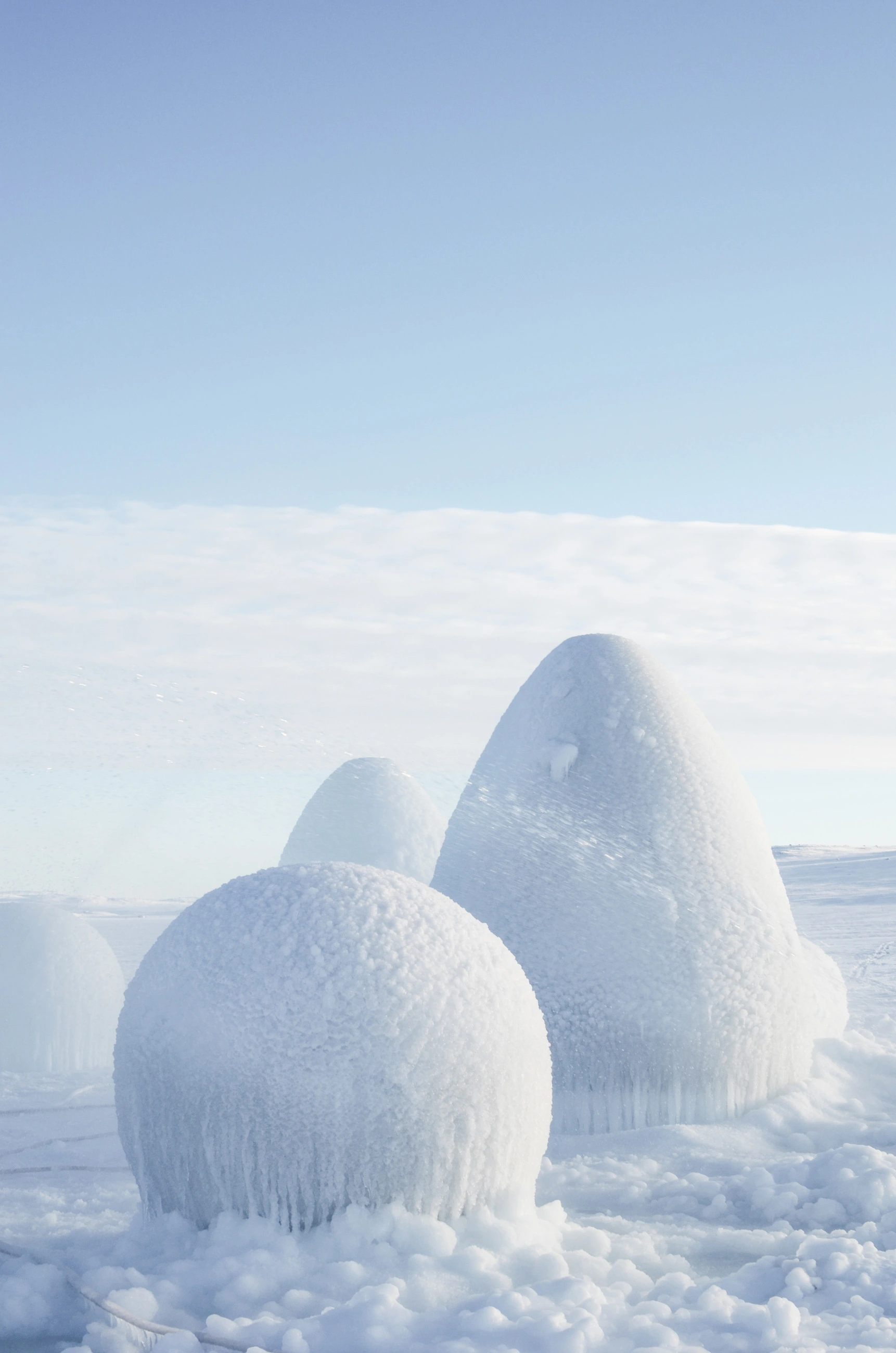
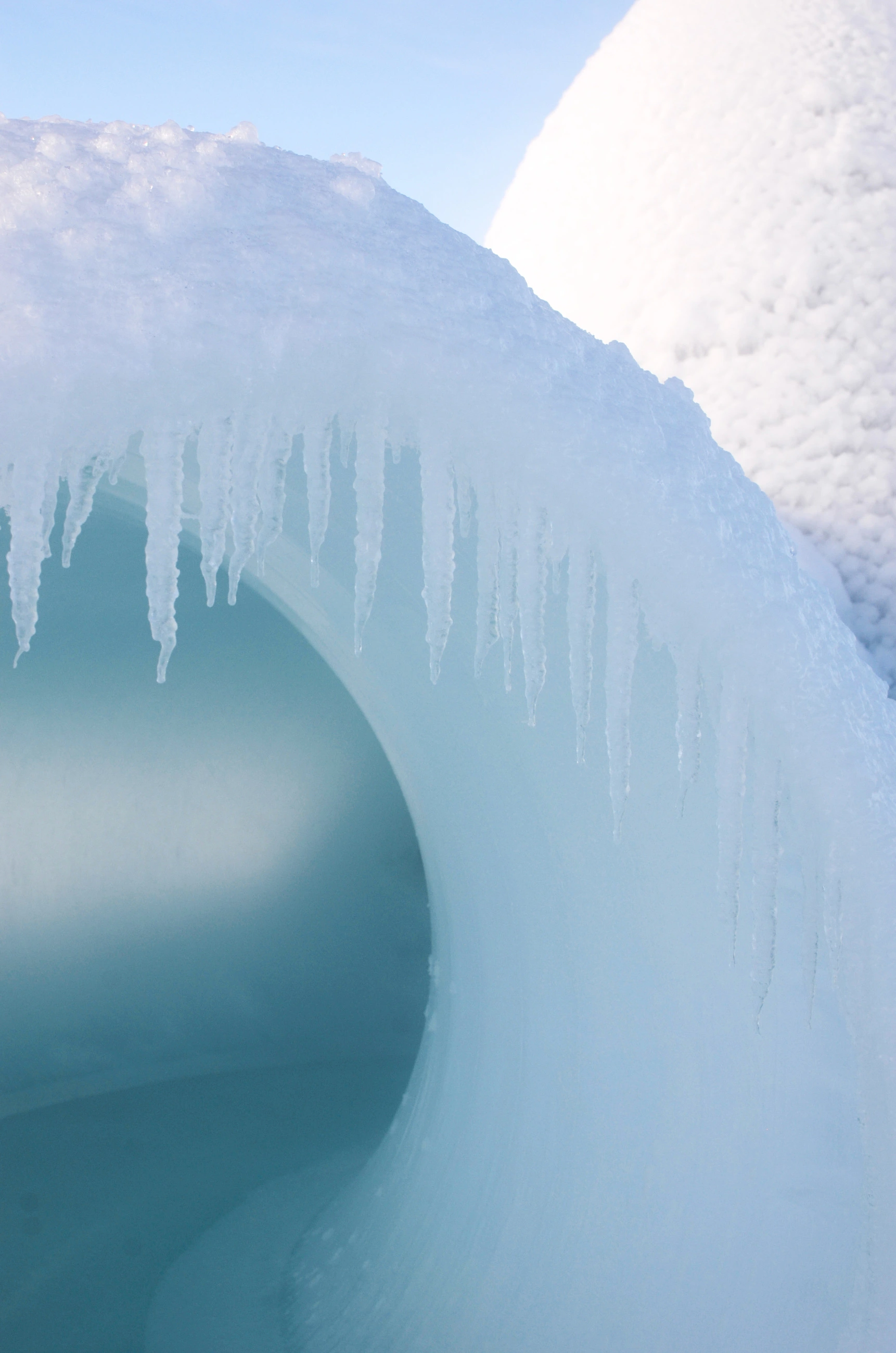
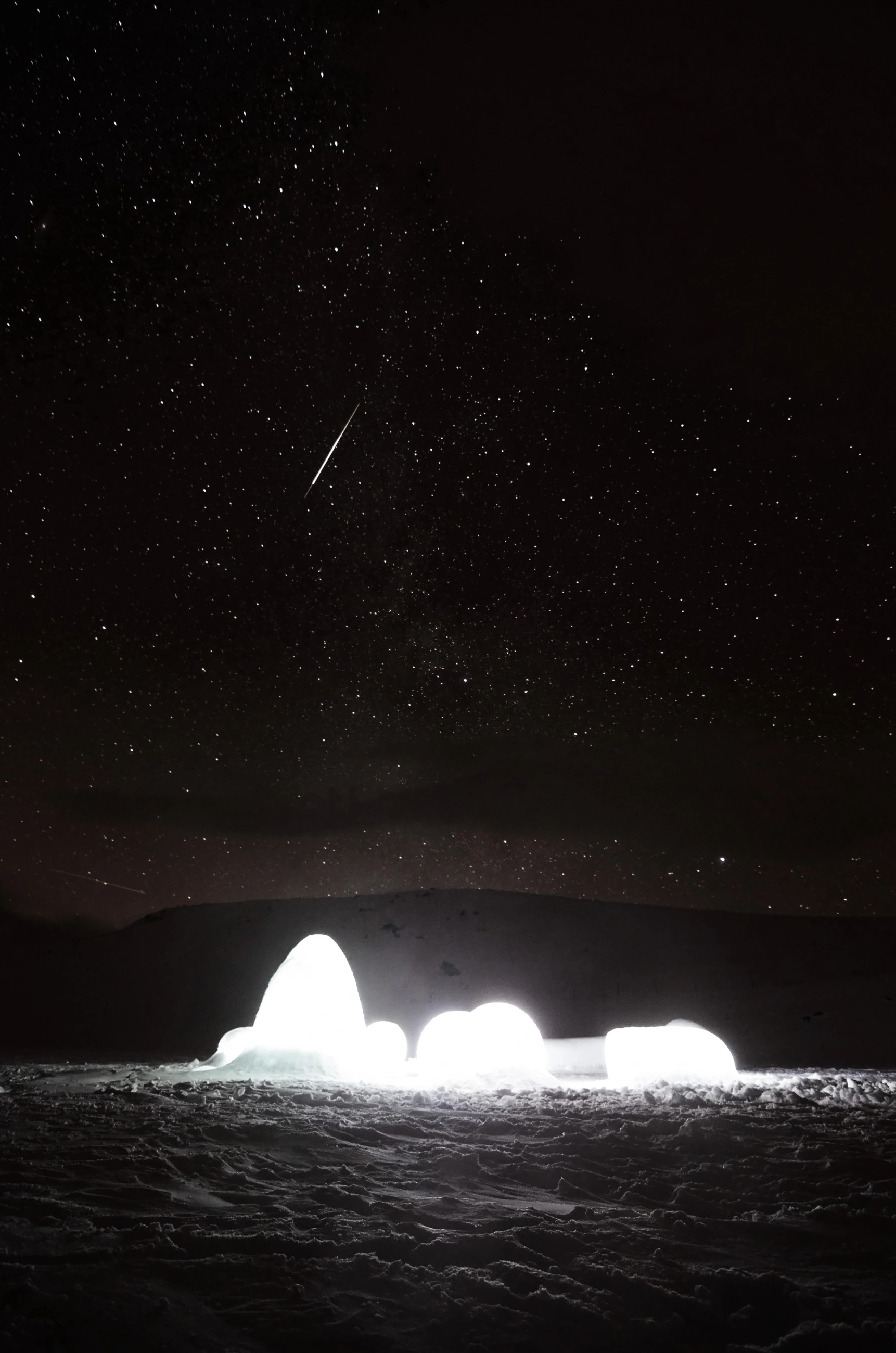
Five years ago, our studio won the Warming Huts competition in Winnipeg, Canada. The main task was to design a shelter for skaters on the world's longest skating rink. Together with ten other studios from all around the world (including, for example, Frank Gehry’s studio), we spent one beautiful week realizing our competition proposal. During construction, we were testing a technology of building ice objects simply by spraying water onto big balloons. As a result, we created ice igloos that were slightly different from typical ones. Our igloo-building device, called Polar Hen, made a very thick ice shell characterized by a very specific light conductivity. From the outside, these objects had a very mysterious appearance, as if they were not from this planet. Thanks to the water, these objects had a light blue tint. Visiting the inside space was an original and unexpected experience, as one couldn’t imagine the scale of the inner space.
Due to unexpectedly warm weather, we headed home with only one completely finished object, but on the other hand, with a very good feeling that our original idea actually worked. Our enthusiasm was so great and the weather in the Czech Republic so cold that after arriving back to Liberec, we spontaneously built another object on the Liberec dam. Among passersby and ice skaters, this ice ball was extremely popular, and for us, it was a successful completion of this project.
Location:
Eidfjord - Norway
Client:
Jan Smetana
Status:
Construction
Project year:
2017
Architects:
Jan Mach, Lukáš Holub, Jan Vondrák, Allesandro Nicolo
Design engineer:
Mjölking s.r.o.
Built-up area:
50 m²
Budget:
50 ths. CZK
Photographs:
Tomáš Tesař, Radek Petrášek
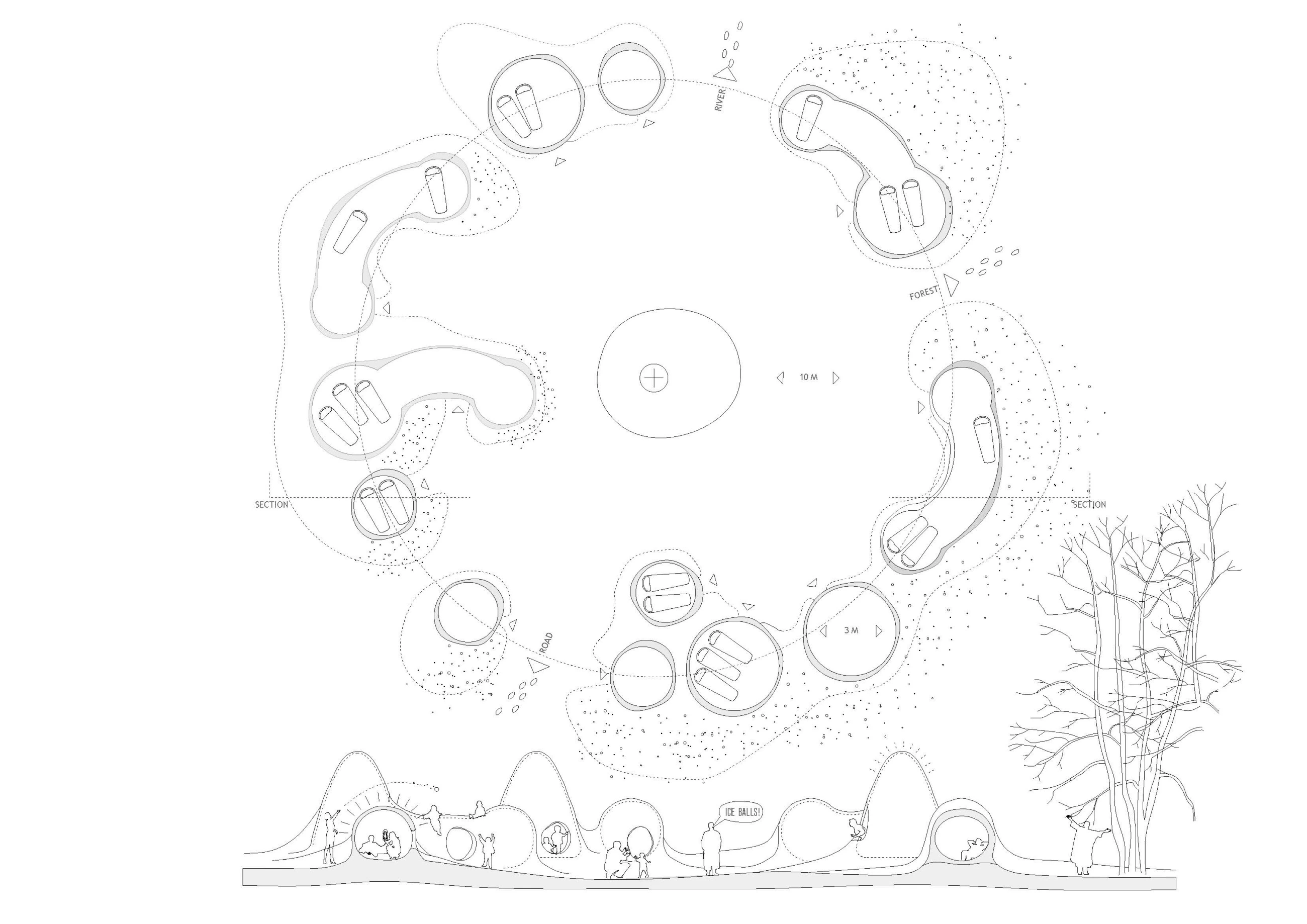
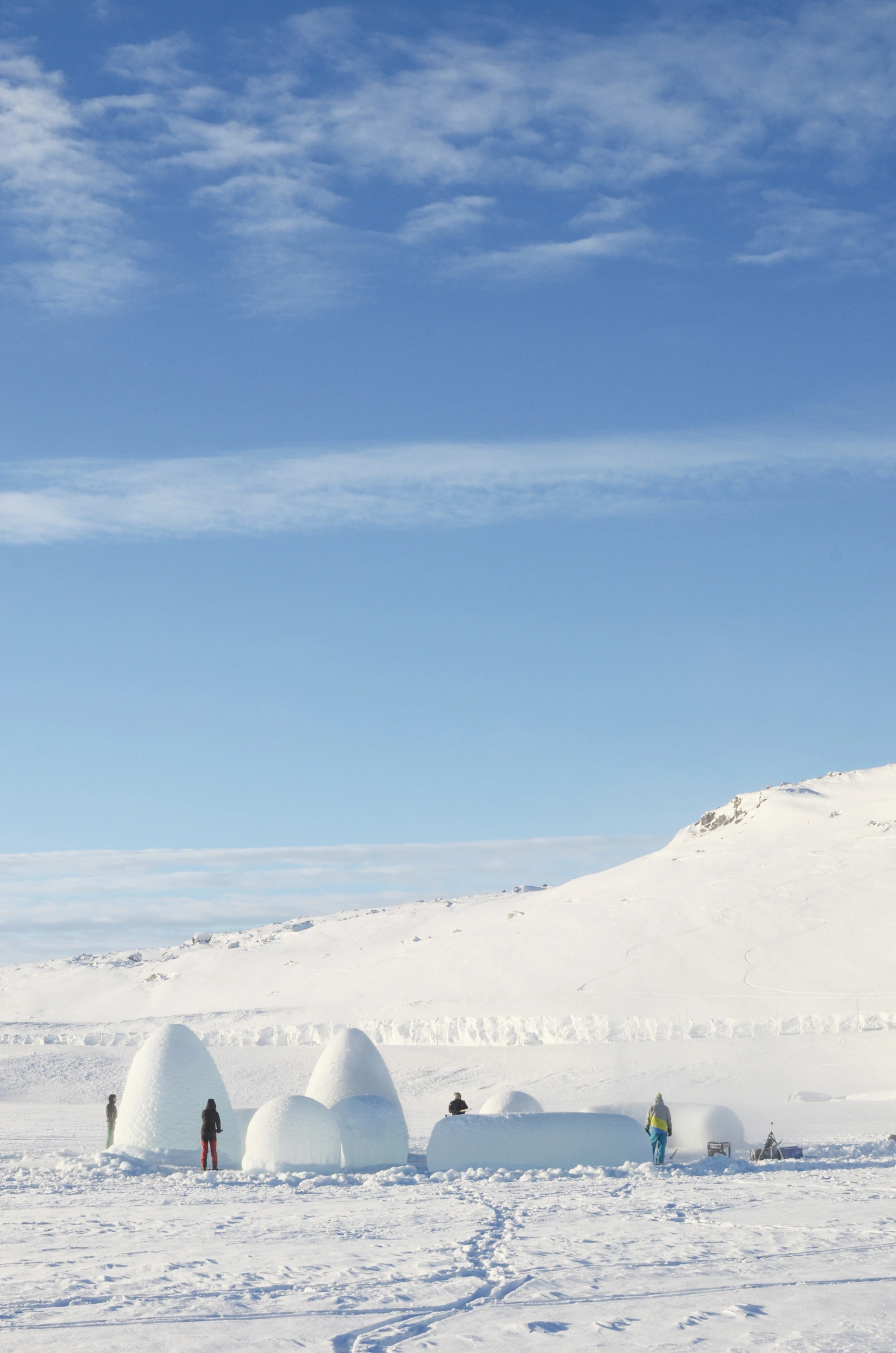
This autumn, we were approached by Jan Smetana and Vojtěch Hejtmánek, who together run Full On (www.fullon.no), an outdoor adventure agency in Norway. The company is based in Hardangervidda National Park. Looking to expand their services, they discovered our Canadian project online, and the idea was born. Our goal was to create a unique ice village on one of the frozen lakes in the heart of Hardangervidda. These structures could serve as accommodation for watching the aurora borealis, a shelter for ice fishermen, or a cozy refuge for cross-country skiers escaping harsh weather.
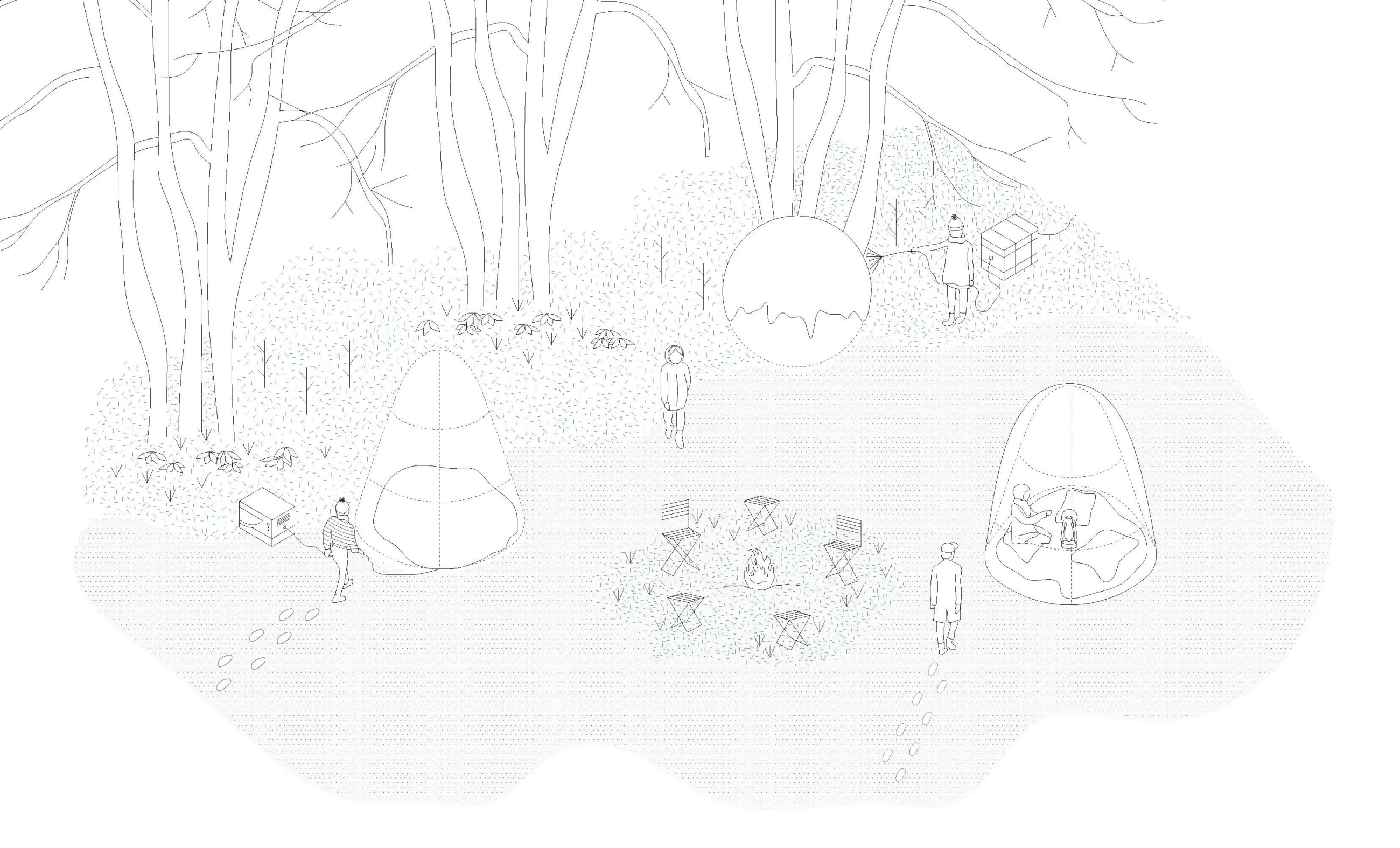
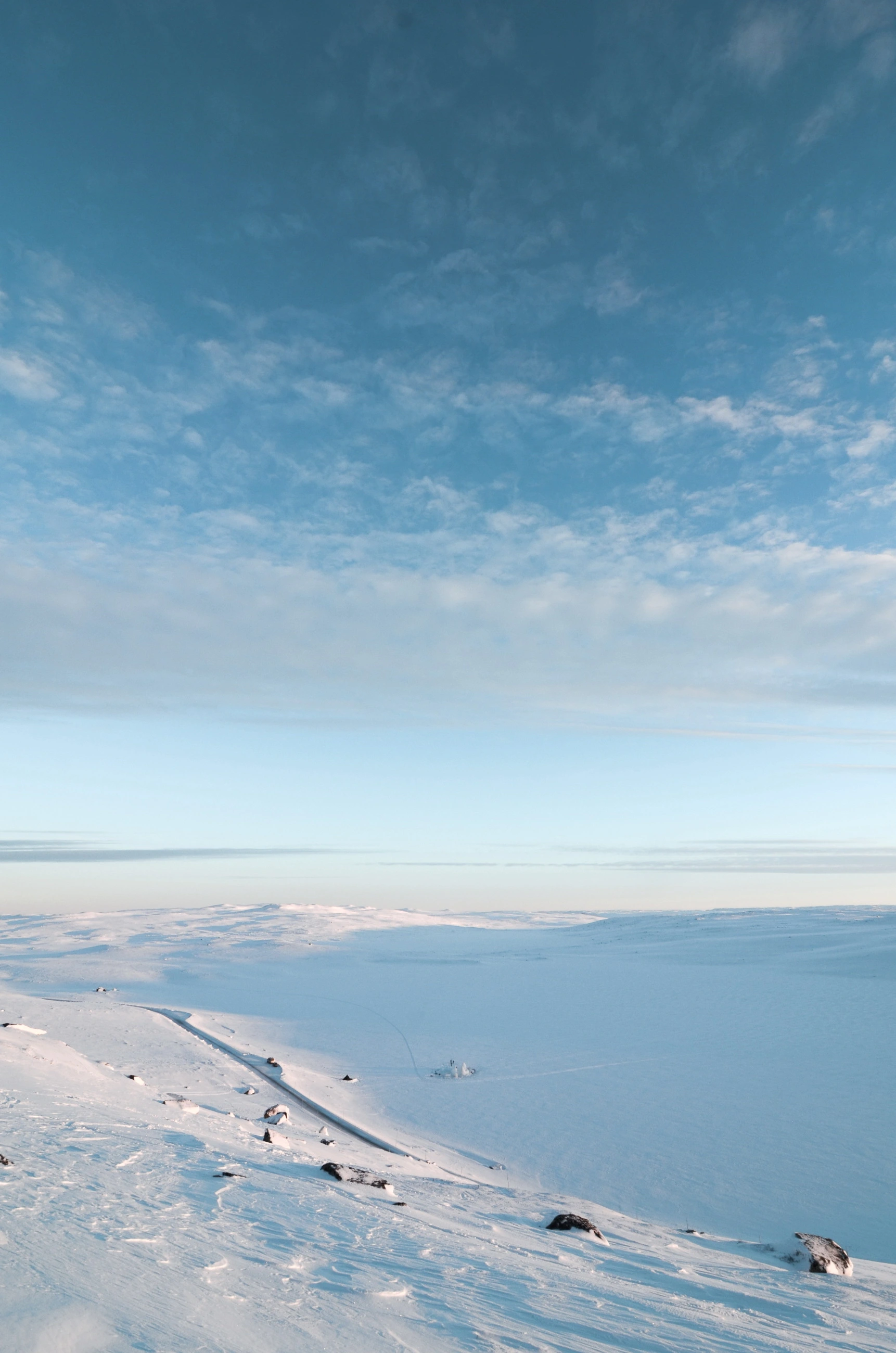
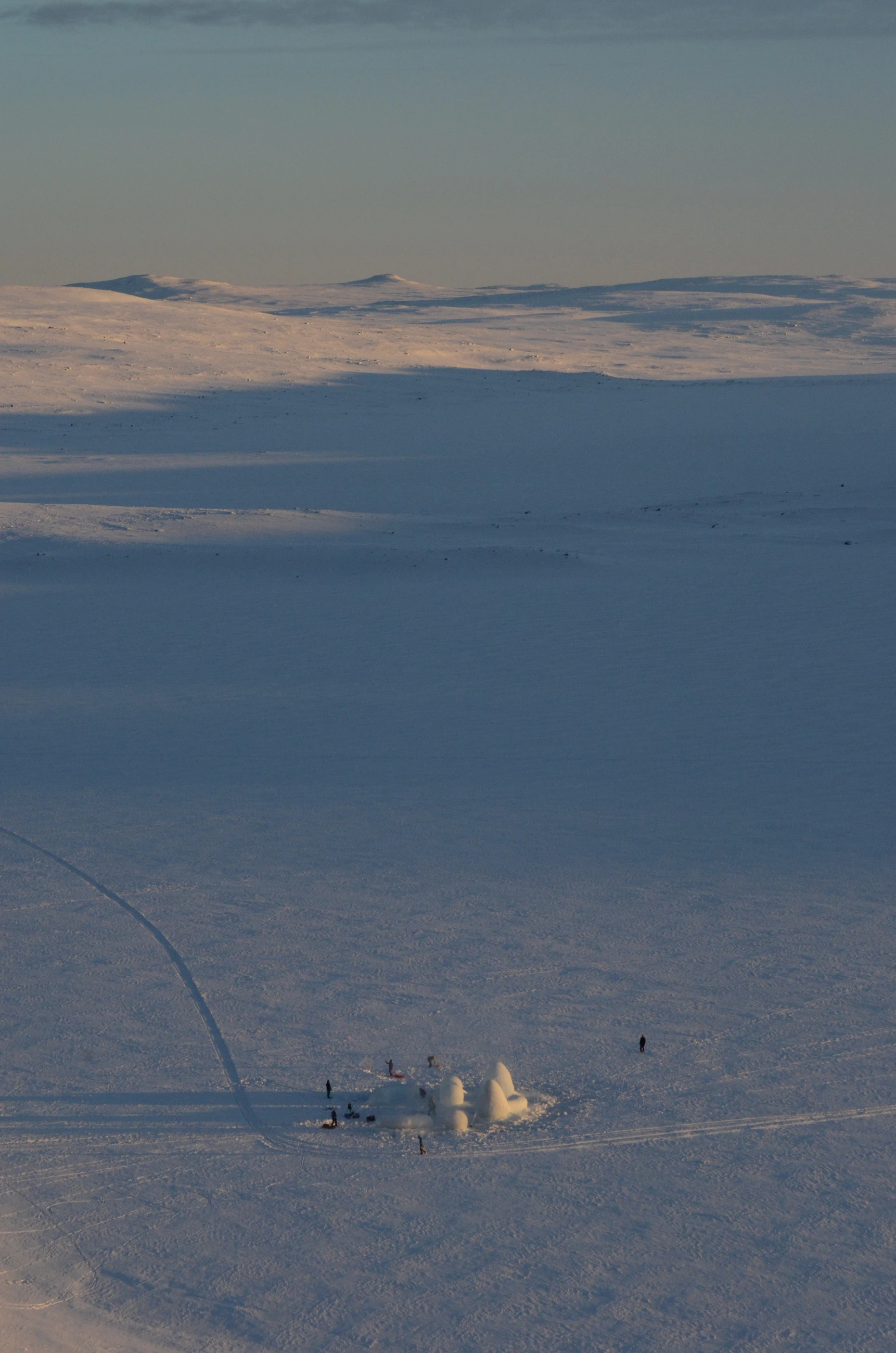
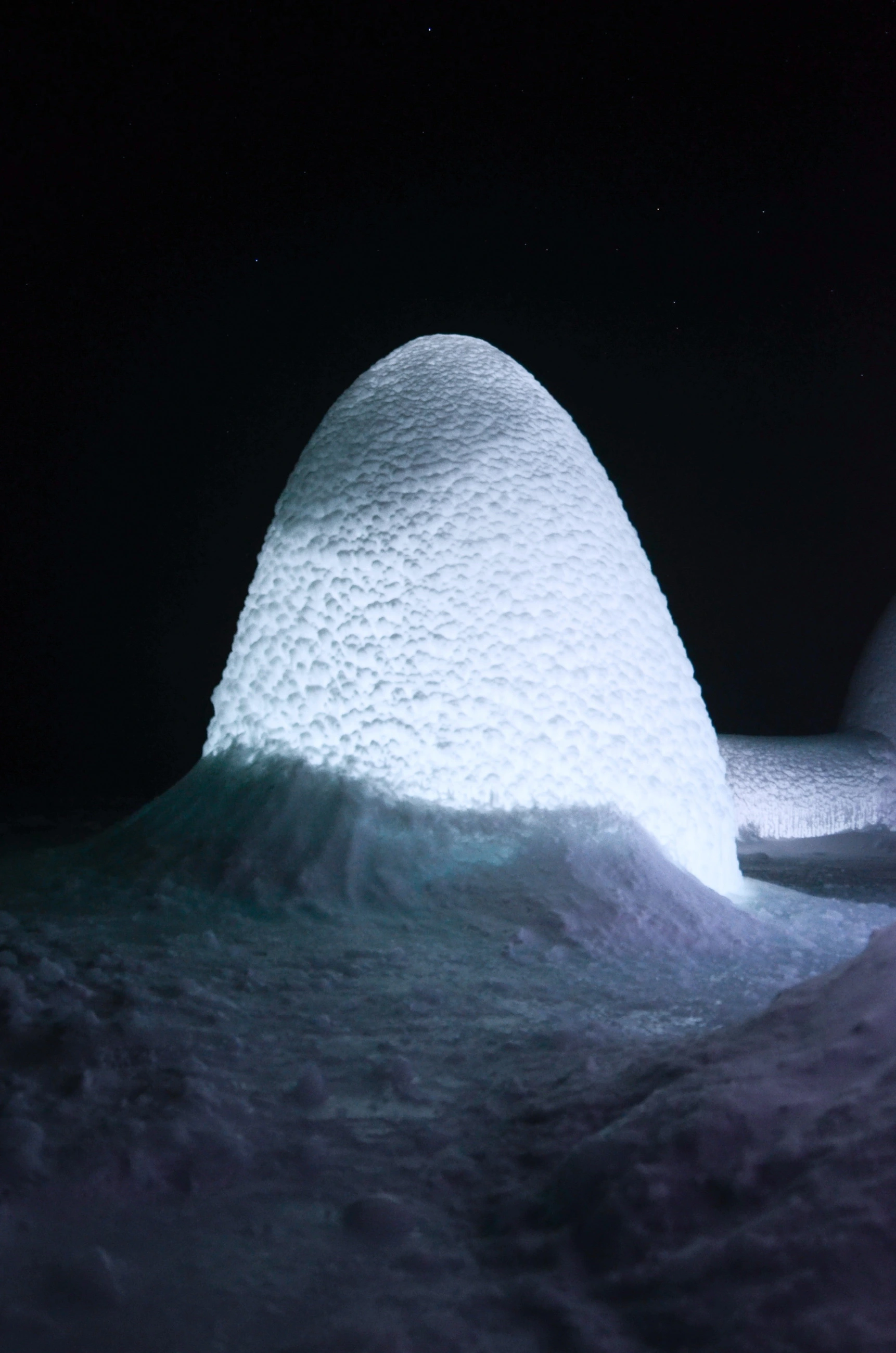
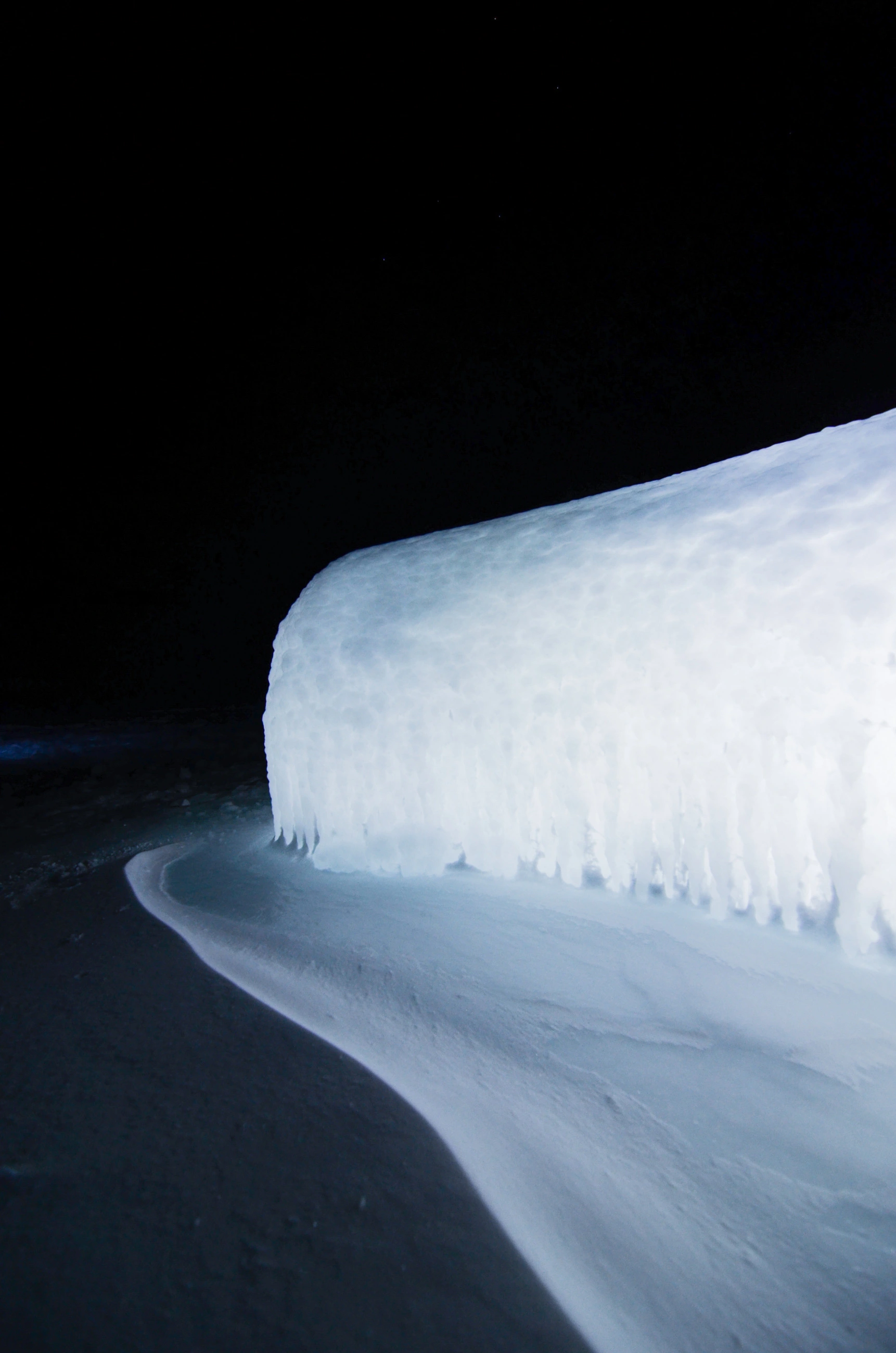
After several weeks of preparation, our entire studio set off for Norway, packed with three new inflatable molds. We chose geometrically simple forms because they work best both aesthetically and structurally. The largest mold was a rounded cone standing 3.5 meters high. Next was a simple sphere with a diameter of 2 meters, and the last object was a long cylinder that could stand alone or serve as a connector between two structures. The weather forecast wasn’t great this time either, so right after arriving, we decided to start building immediately. The location was breathtaking. Thanks to the hard frost, we literally watched the village grow before our eyes. Within four days, we had completed around ten structures and were thrilled with the result. Unfortunately, the predicted temperature rise soon arrived, and our work was ended by the forces of nature. The main goal of the expedition was to explore the characteristics of ice under different temperatures, test the stability of each shape, and confirm the overall functionality of the technology. All of this was accomplished, fully meeting both our and our client's expectations. The installation itself became very popular, and it is quite possible that a few more structures will be added this year. The official opening of the Ice Balls village is planned for next year at the new Dagali Outdoor Center.