Hunting lodge
Just as snow clouds roll over Smědavská Mountain, so too do the stories of human lives, landscapes, and houses keep moving forward. Time rules here. Without hesitation or mercy, it shifts the tracks of fate again and again for those who make their lives in the mountains. The landscape changes along with them, just as the cotton grass blooms and fades on the meadows of the Jizera Mountains year after year.
Lokation:
Bílý Potok, Smědava, ČR
Investor:
Martin Půlpitel
Project website:
Project status:
Realized
Project year:
2021
Building footprint:
308 m²
Authors:
Jan Vondrák, Filip Cerha, Anna Hrušová, Eliška Müllerová, Jan Mach
Engineering:
Contractor:
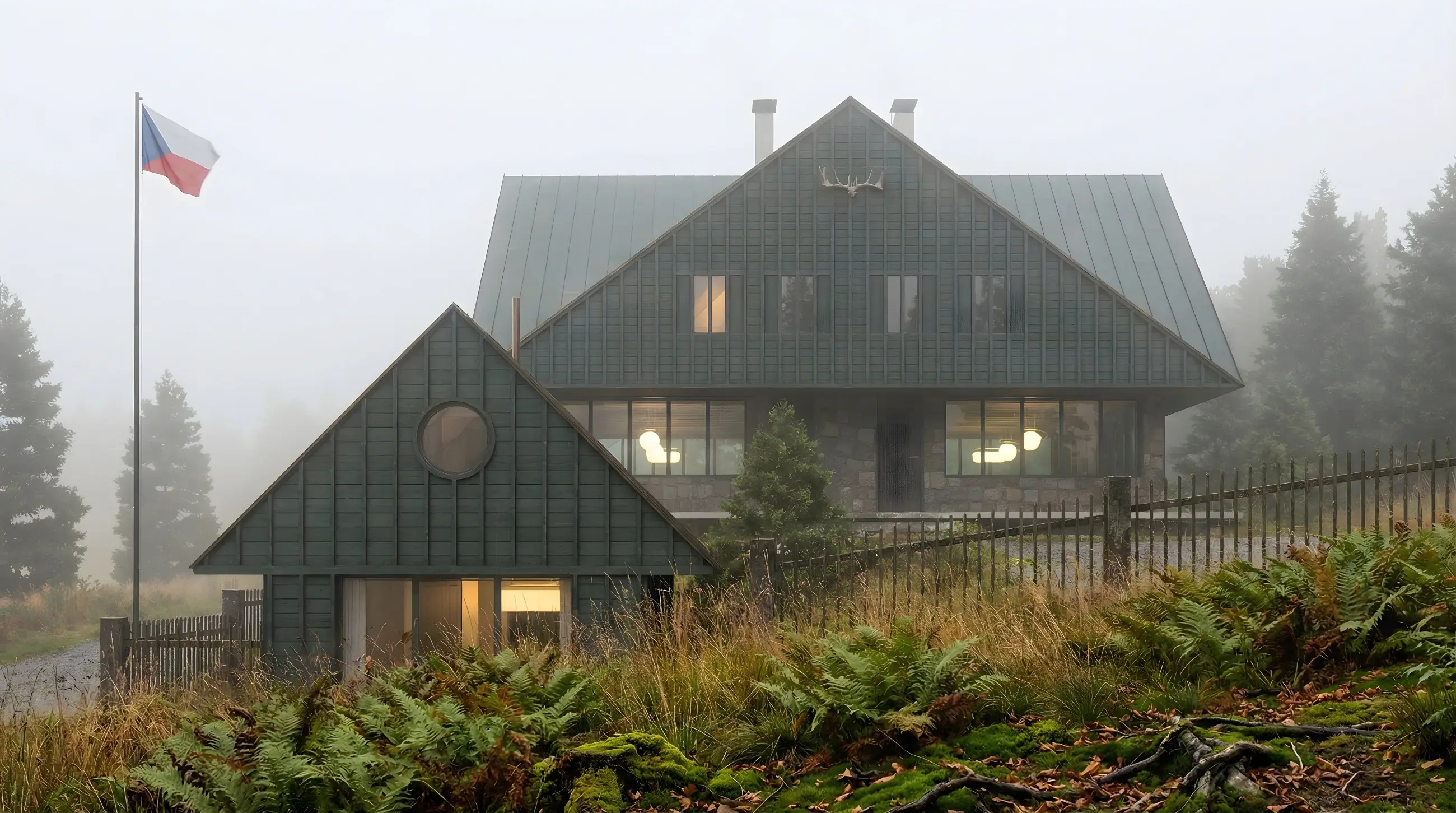
One of the countless stories of the Jizera Mountains is that of the Hunting Lodge at Smědava.
Its fate was shaped by the aftermath of two world wars, only for the building to eventually burn down through human carelessness. But our story does not end there. Before the first butterbur leaves emerge along the road from Bílý Potok, the story of the Hunting Lodge will begin again. Let us first travel back to where it all started, so that we may begin telling a new one.
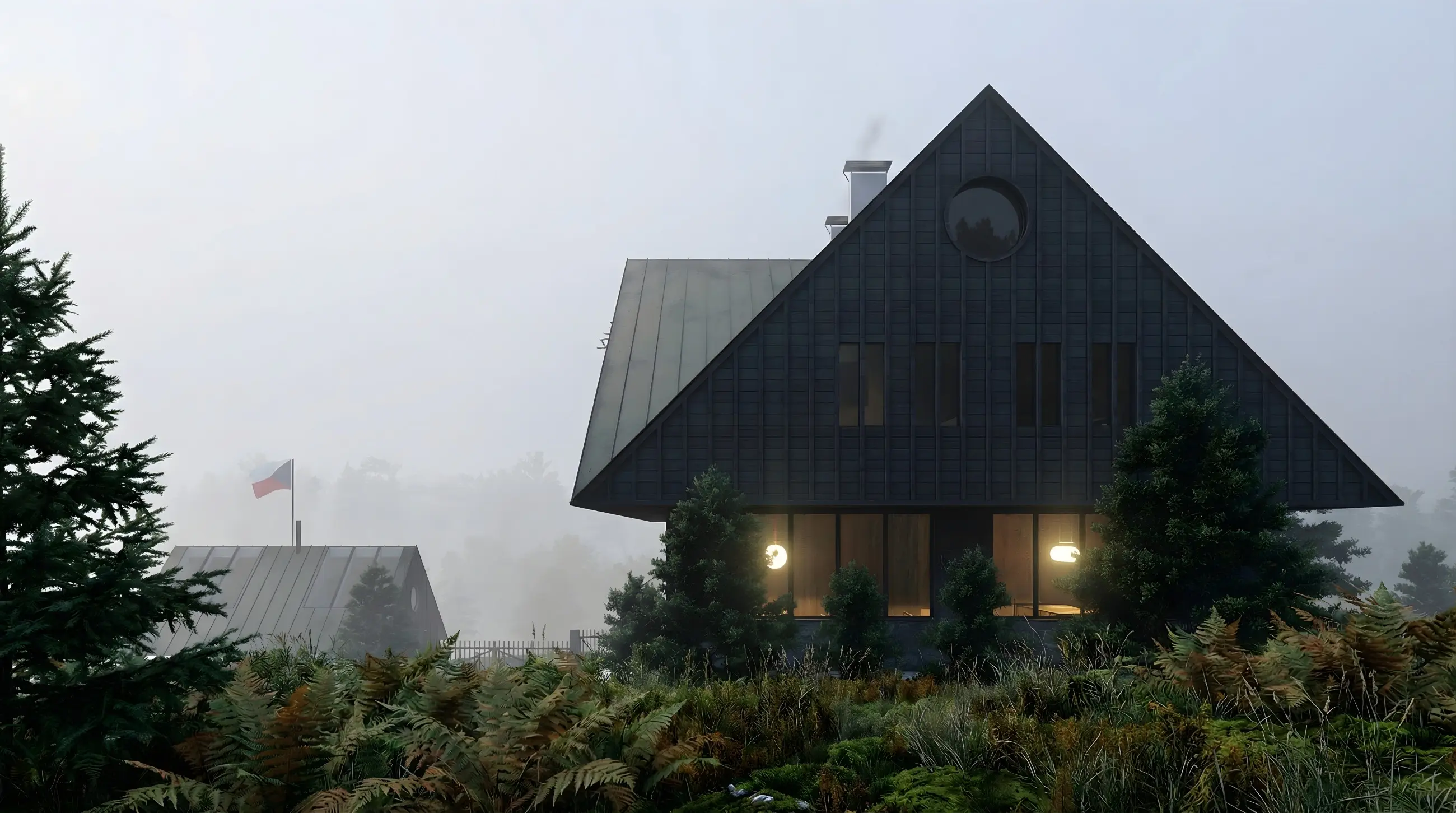
When the Clam-Gallas family established a vast game preserve in the Jizera Mountains in the mid-nineteenth century, it was an almost unimaginable undertaking, and an extraordinarily expensive one by the standards of the time. The construction of fences, gates, and traps cost nearly twenty-two thousand guilders, equivalent to roughly one hundred million Czech crowns today. In the heart of the Jizera Mountains, fifty-five square kilometres of land were enclosed, allowing the nobility to hunt in comfort while preventing game from escaping into neighbouring estates.

Sixty years later, Franz Clam-Gallas decided to improve the facilities of the preserve by building a new hunting lodge. The chosen site lay in one of the most accessible hunting grounds beneath Smědavská Mountain. Between 1910 and 1911, Josef Hönig, a builder from Frýdlant, constructed the lodge for the count. Its location connected directly to a network of hunting trails winding through some of the finest grounds for hunting red deer. The lodge became a base for many distinguished visitors, noble counts, and even government officials.
Count Franz died in 1930. In the final years of his life, he witnessed profound social changes brought about by the collapse of the Austro-Hungarian Empire and the land reforms that struck the Czech aristocracy particularly hard. Yet the count never stopped fighting for the estates entrusted to his care, for the places he loved.
After the Second World War, the lodge was converted into accommodation for forestry workers. This new purpose would ultimately prove fatal. On 7 November 1969, a devastating fire broke out in the building. The blaze most likely started with a pair of rubber boots carelessly left to dry beside a stove. They caught fire, and the flames spread through the lodge. The transformation of the building into workers' accommodation, followed by its bitter end, says much about the attitude of the new communist ruling class towards the legacy of the local aristocracy, which had already been under immense pressure since the First World War. We will probably never know whose mistake caused the fire. What is certain, however, is that a piece of the history of the Jizera Mountains disappeared along with the lodge. For decades, the site remained a melancholy reminder of times long gone, vanished like the morning mist above Hejnice.
After the charred structures were demolished, only the chimneys and original cellars remained. The abandoned ruins stood for decades before a glimmer of hope appeared in the 1990s. A concrete slab was laid over the old cellars as the foundation for a new building, intended to provide accommodation as well as a mountain rescue station. Unfortunately, a lack of funding brought this ambition to an end, too. And so the ruins continued to decay, right up to the present day. Nature has been reclaiming what once belonged to it. The carefully tended garden has long since disappeared beneath a thicket of slender young birches. The old days have faded away, and the place seems to be waiting to awaken once more.
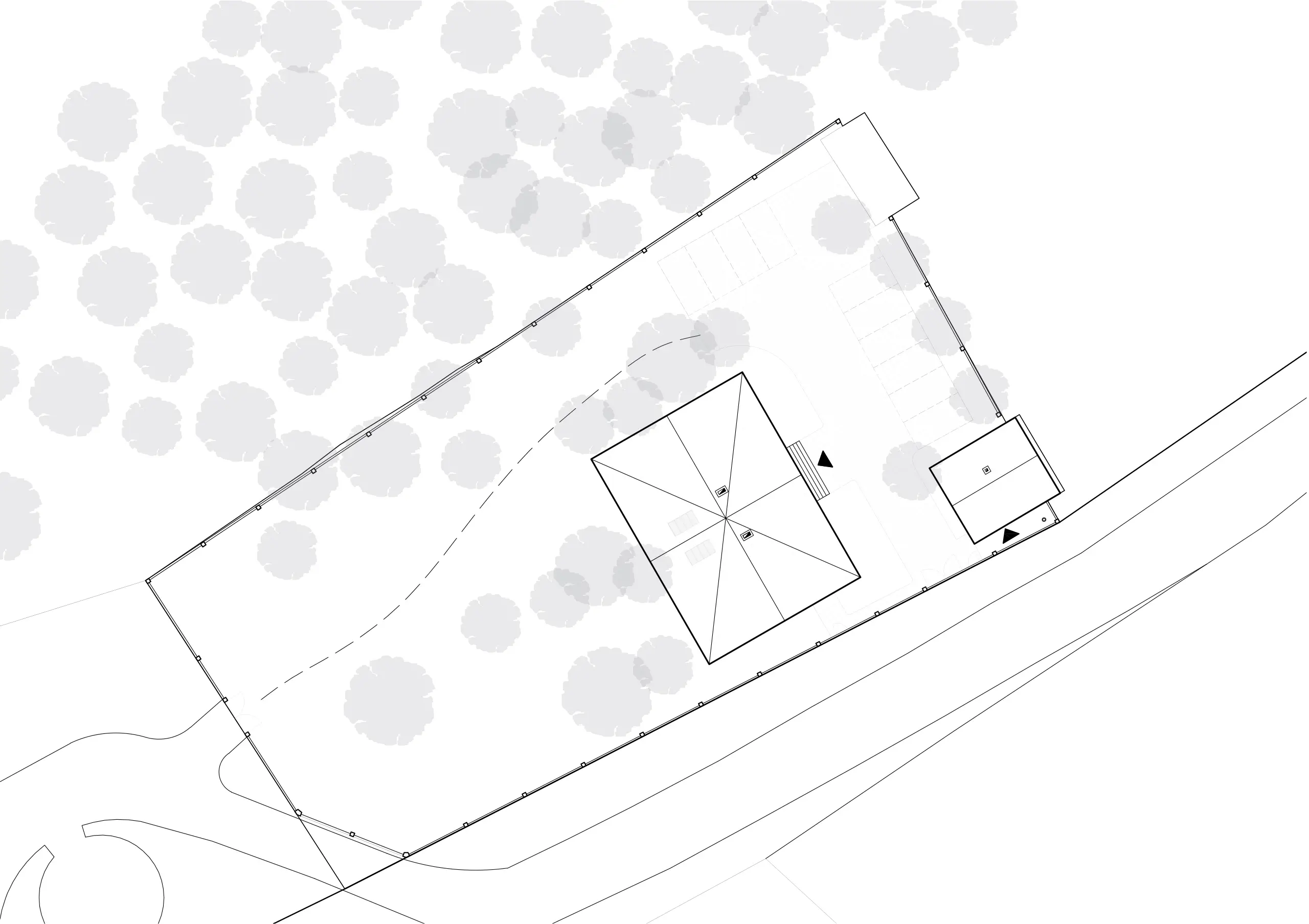
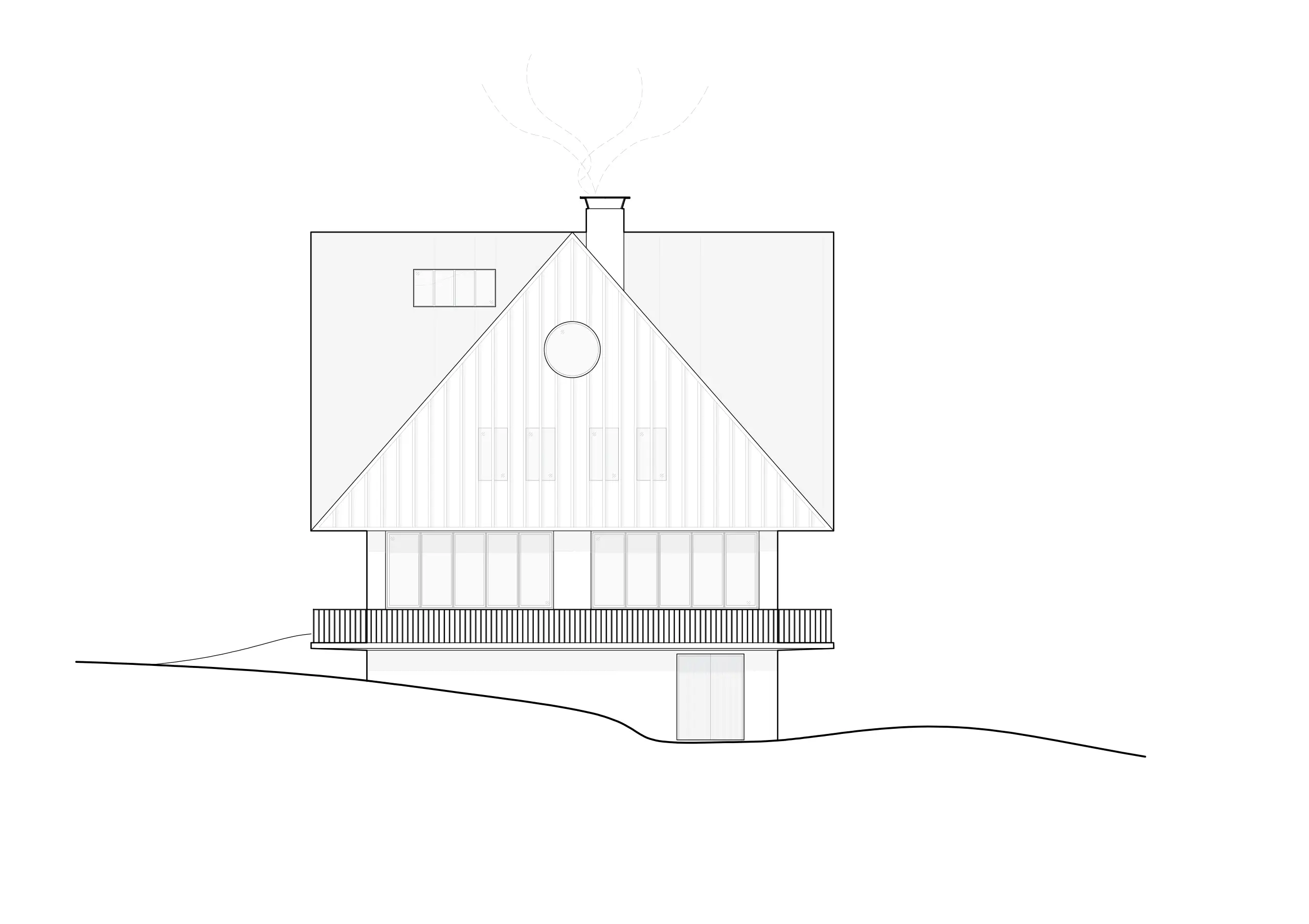
When the property recently changed hands, its new owners approached us with an ambitious idea: to restore the lost splendour of this remarkable place. A new building will rise from the ashes of the original lodge. Contemporary in its architecture, yet respectful of the natural and historical qualities of the site and its fragile surroundings.
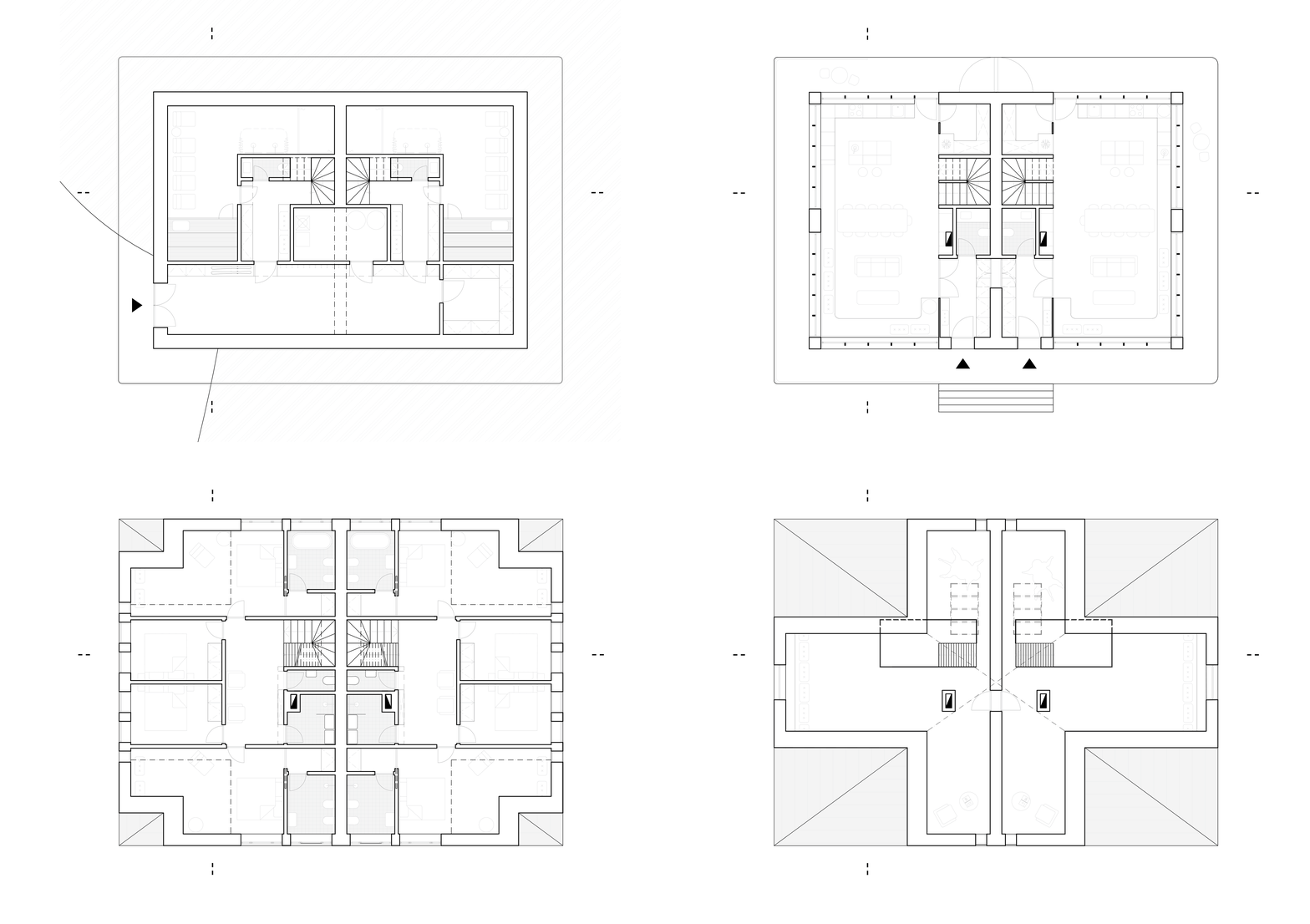
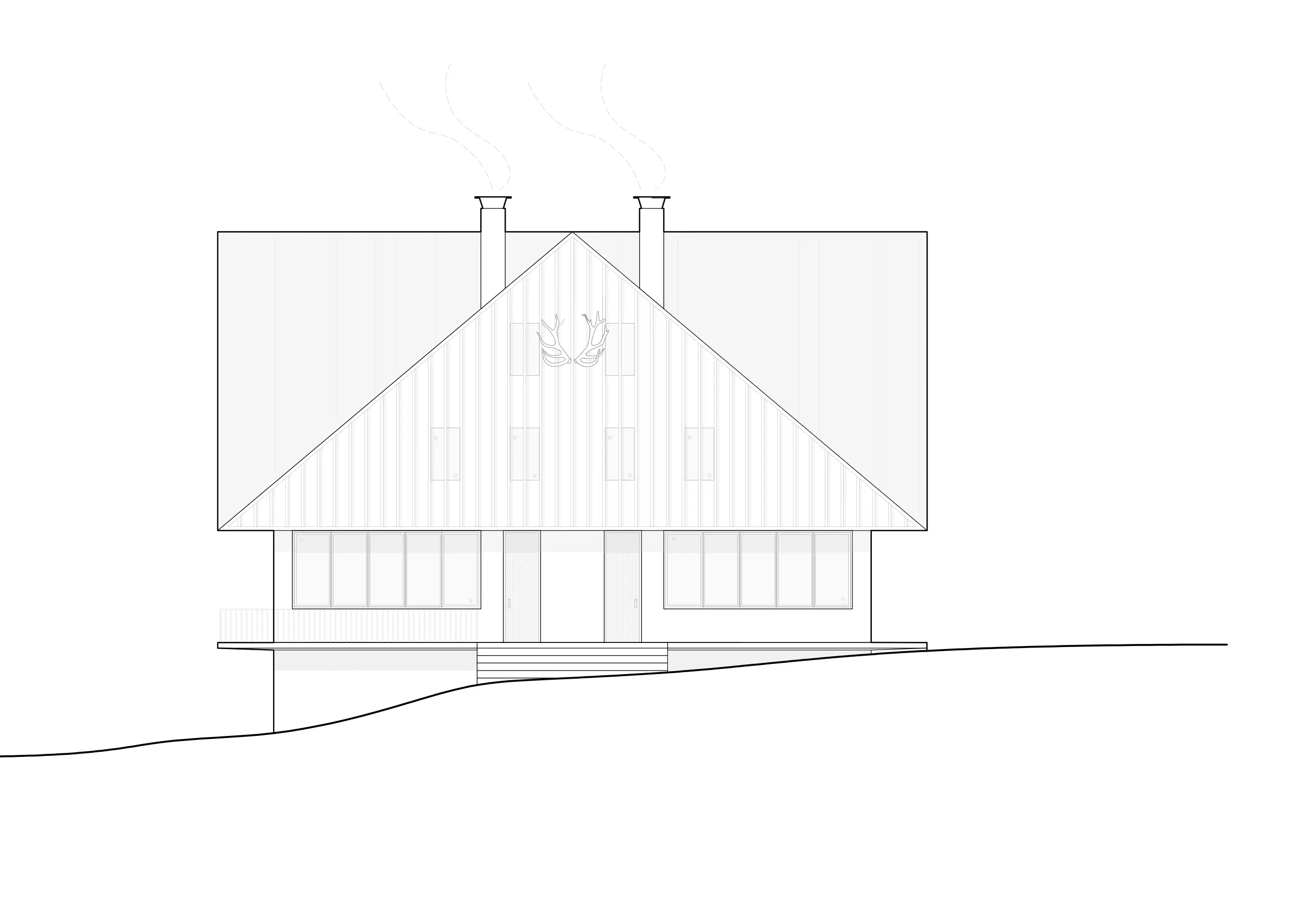
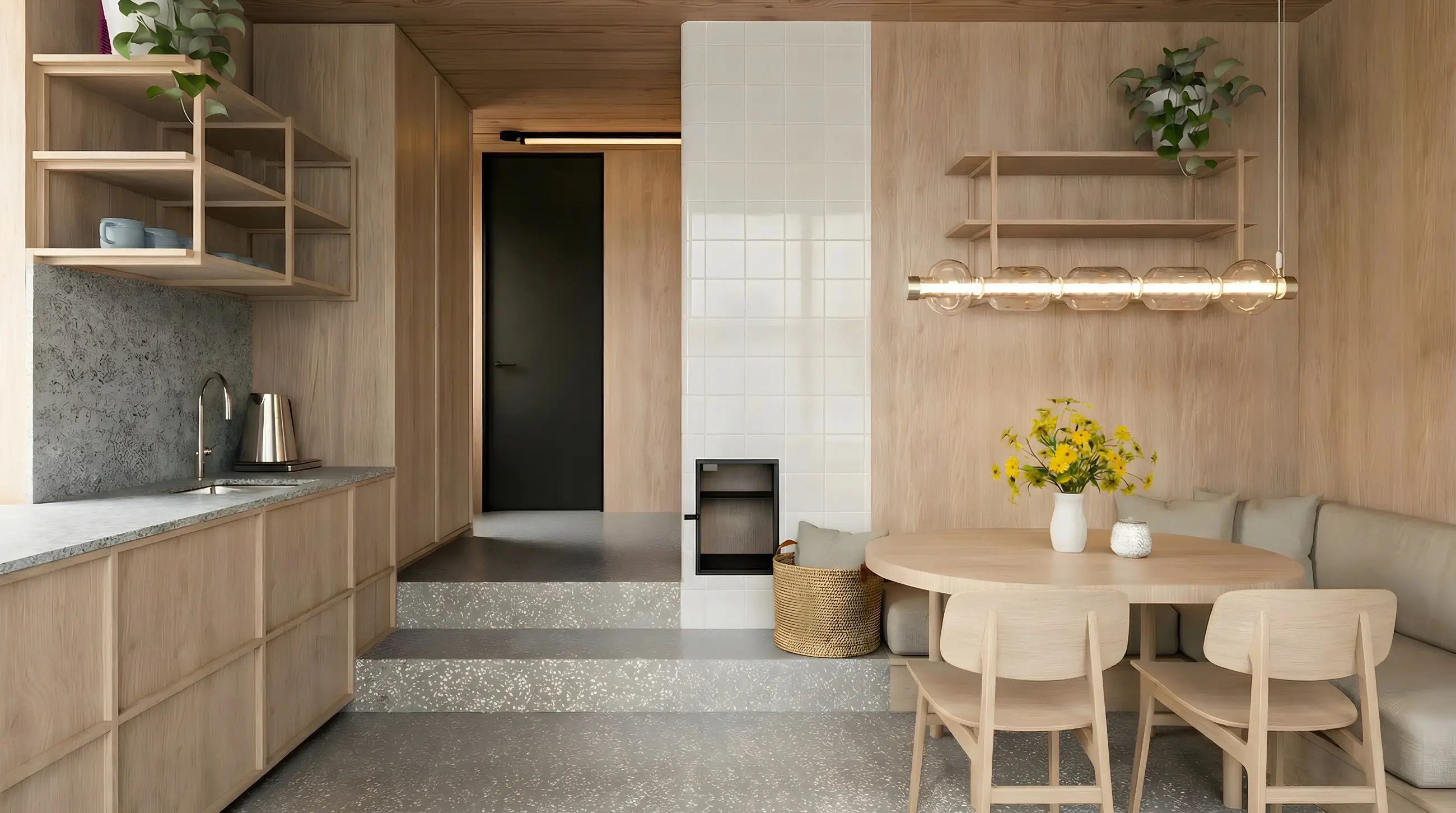
Visitors enter through a stone-clad lower level, which provides shared facilities for storing and maintaining skis and bicycles. From the ski room, guests can access the private areas of their apartments. They can make their way upstairs to the living spaces, with their kitchens, dining areas, and lounges, or retreat to a sauna where tired skiers and cyclists can recover after a long day in the mountains. One level above the entrance lies the main living space. Its glazed walls open the house towards the wild mountain landscape surrounding it. Inside, a large fireplace, comfortable seating, a kitchen, and a long dining table await hungry visitors. The bedrooms occupy the second floor. Each apartment provides twelve beds on the bedroom level, with several additional sleeping places in the open attic, which also serves as a playroom for children.
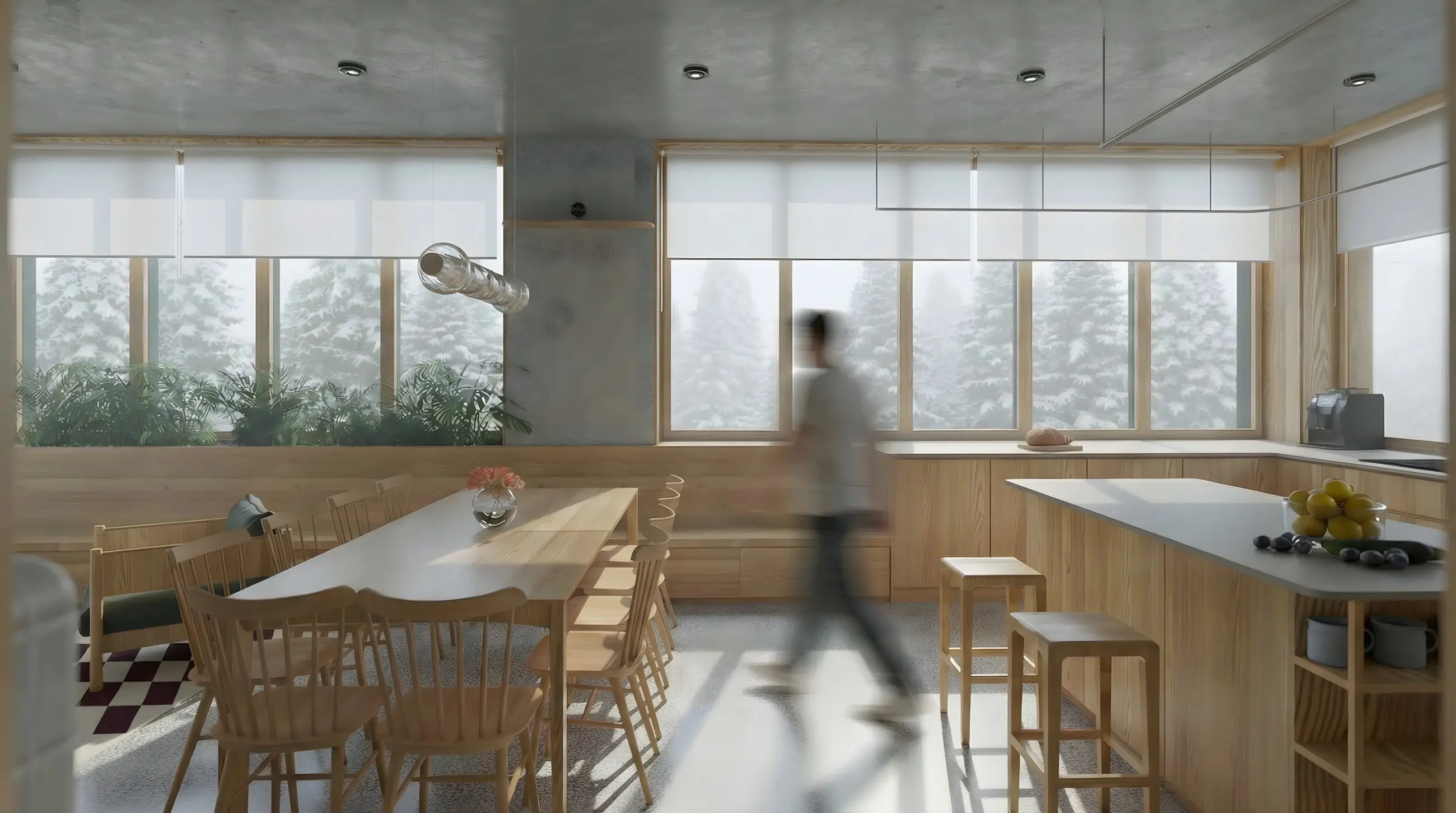
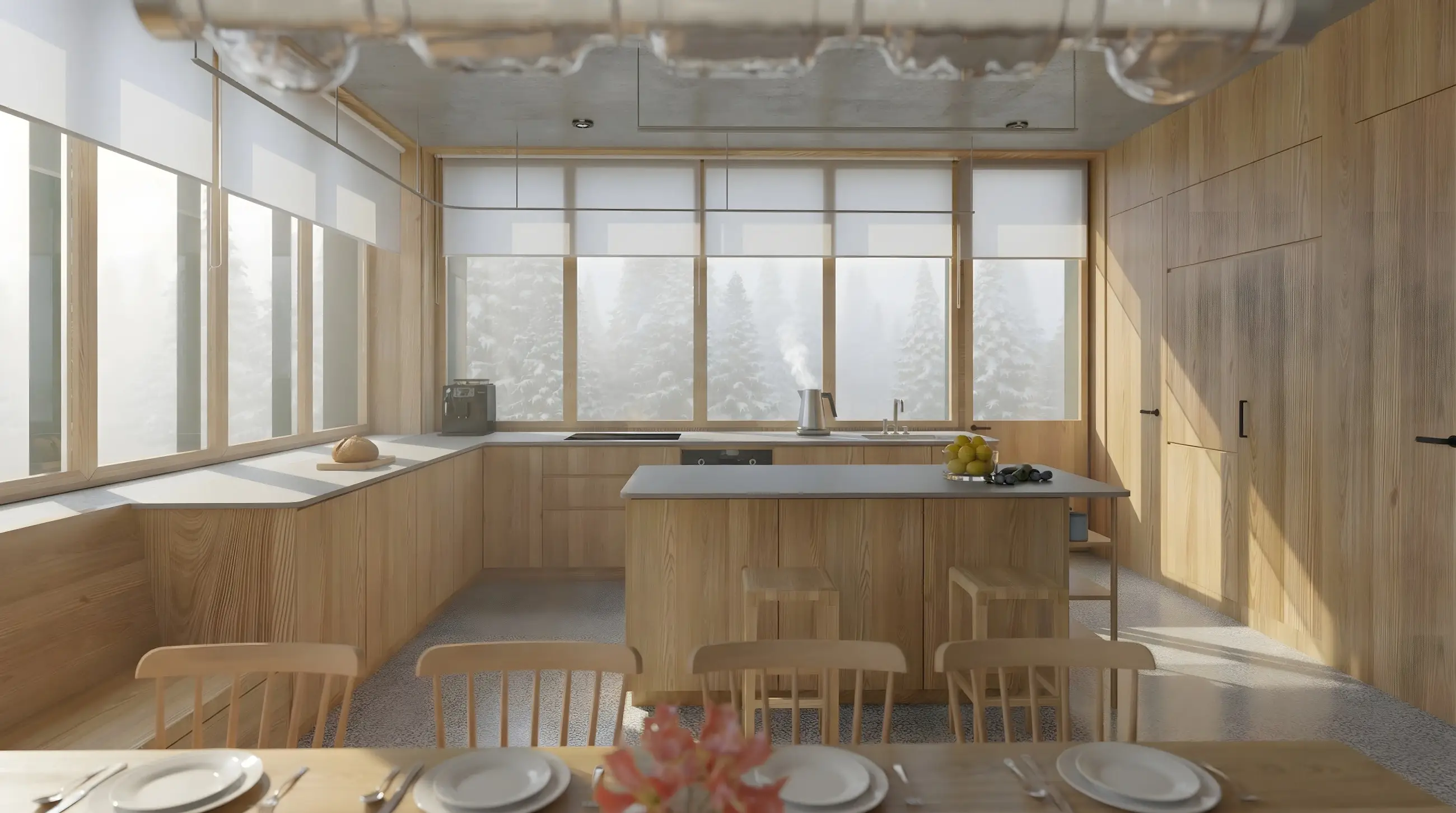
Granite and timber run through both the interior and exterior of the building. From the outside, the architecture respects the principles of building within the protected landscape of the Jizera Mountains. But this does not mean that the house must remain stuck in the nineteenth century. On the contrary, it proudly demonstrates that contemporary architecture can find its place in the mountains while respecting both nature and historical tradition.
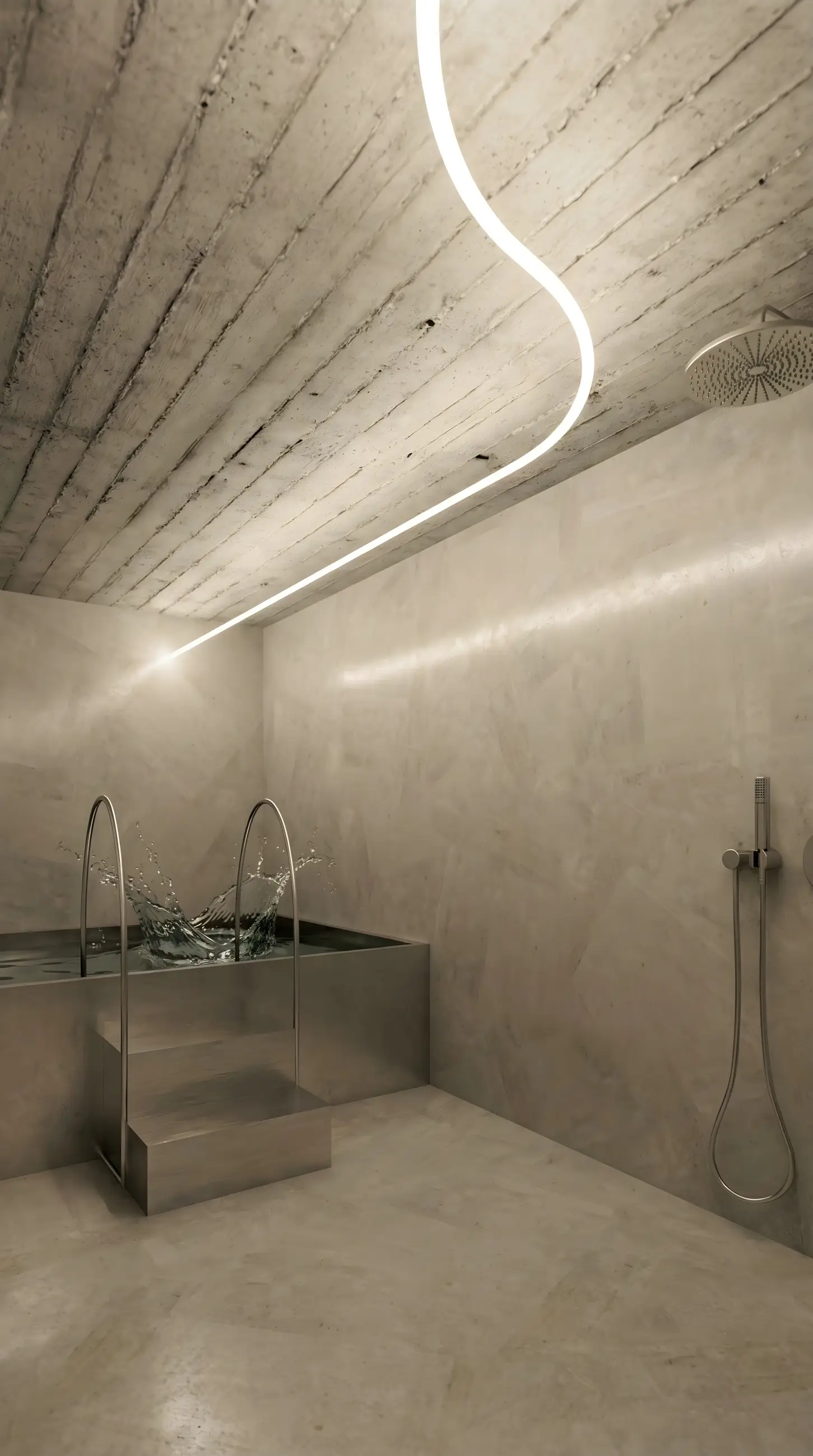
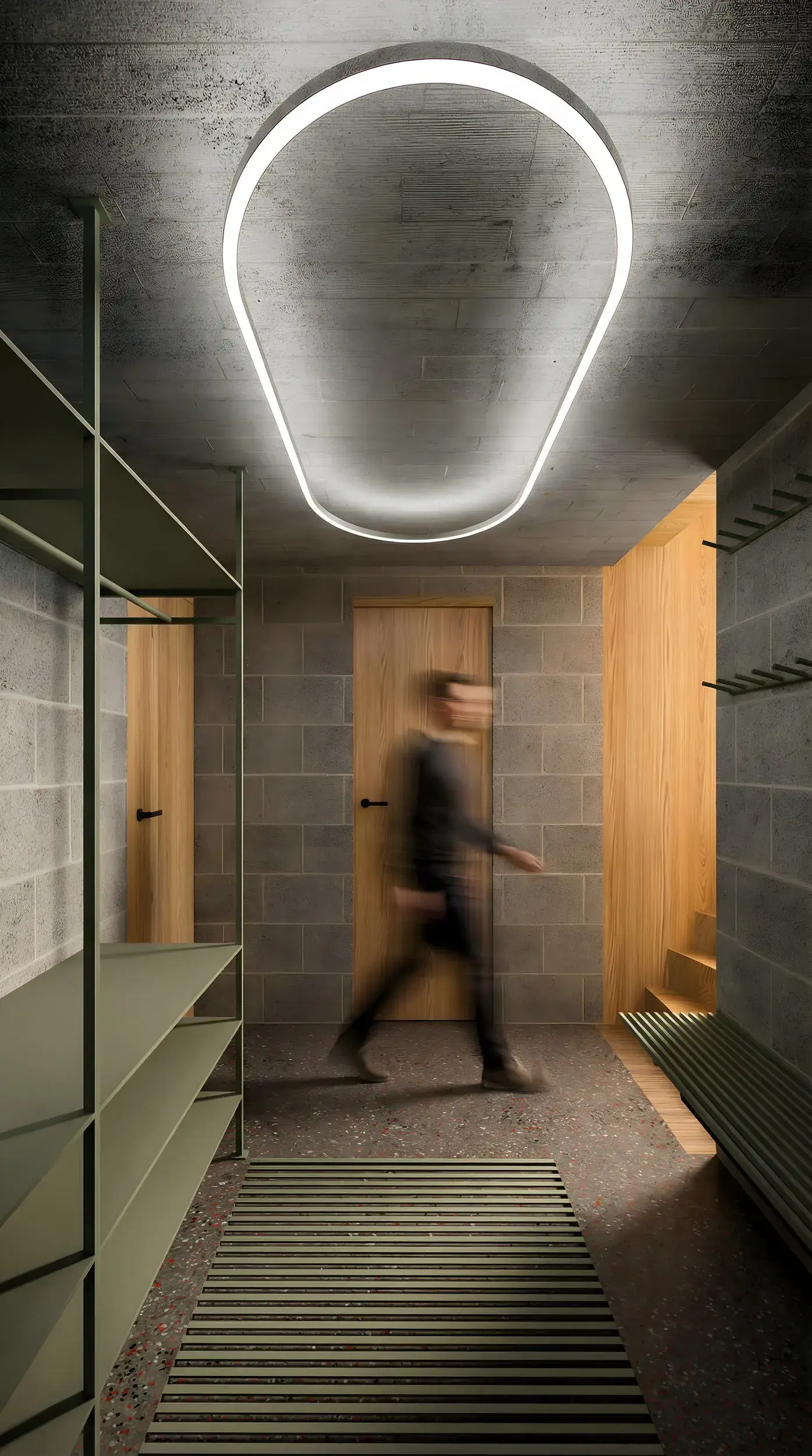
Near the entrance to the property stands the former carriage garage, which we are transforming into a separate apartment, following the same architectural approach as the main building.
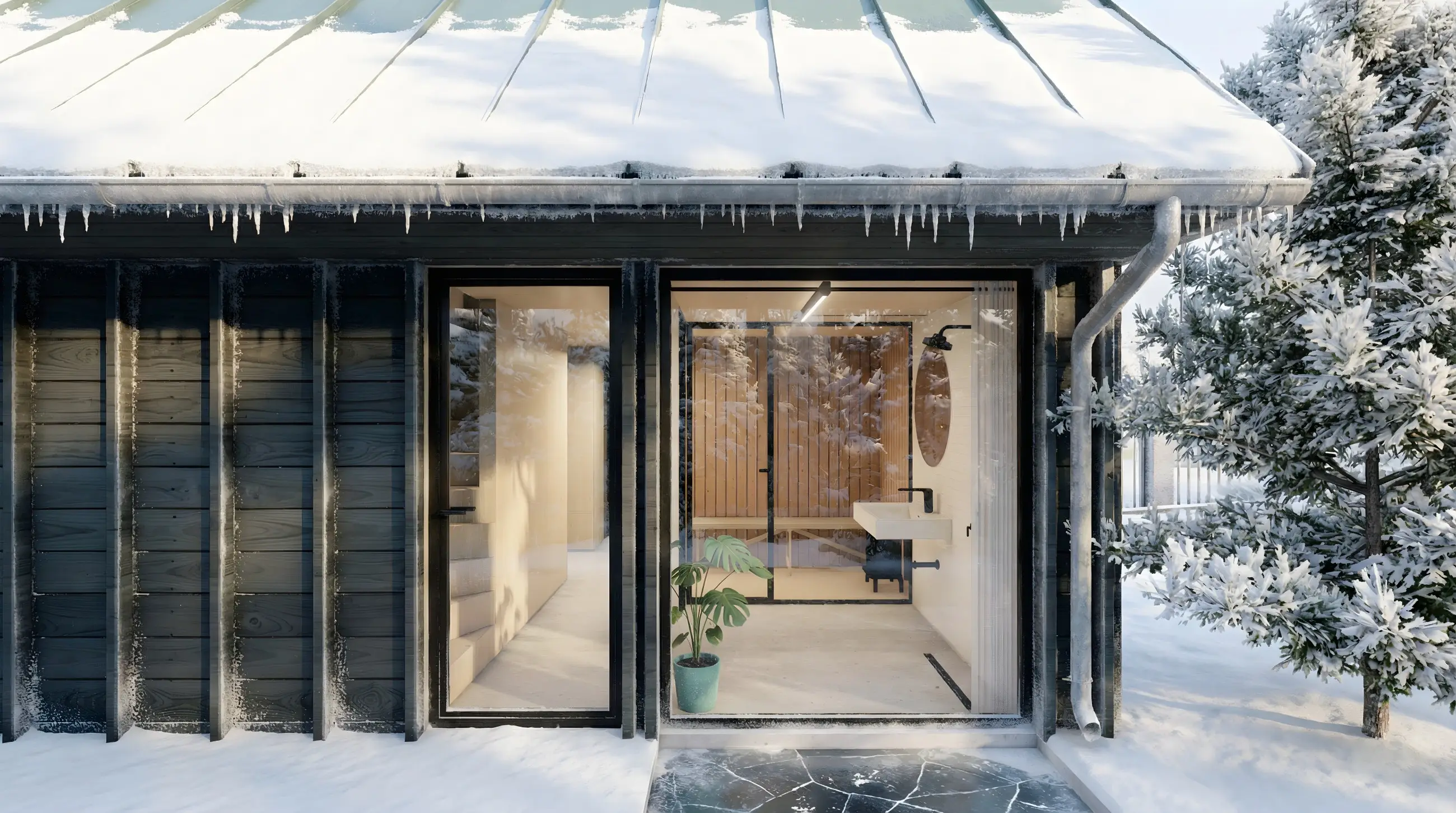
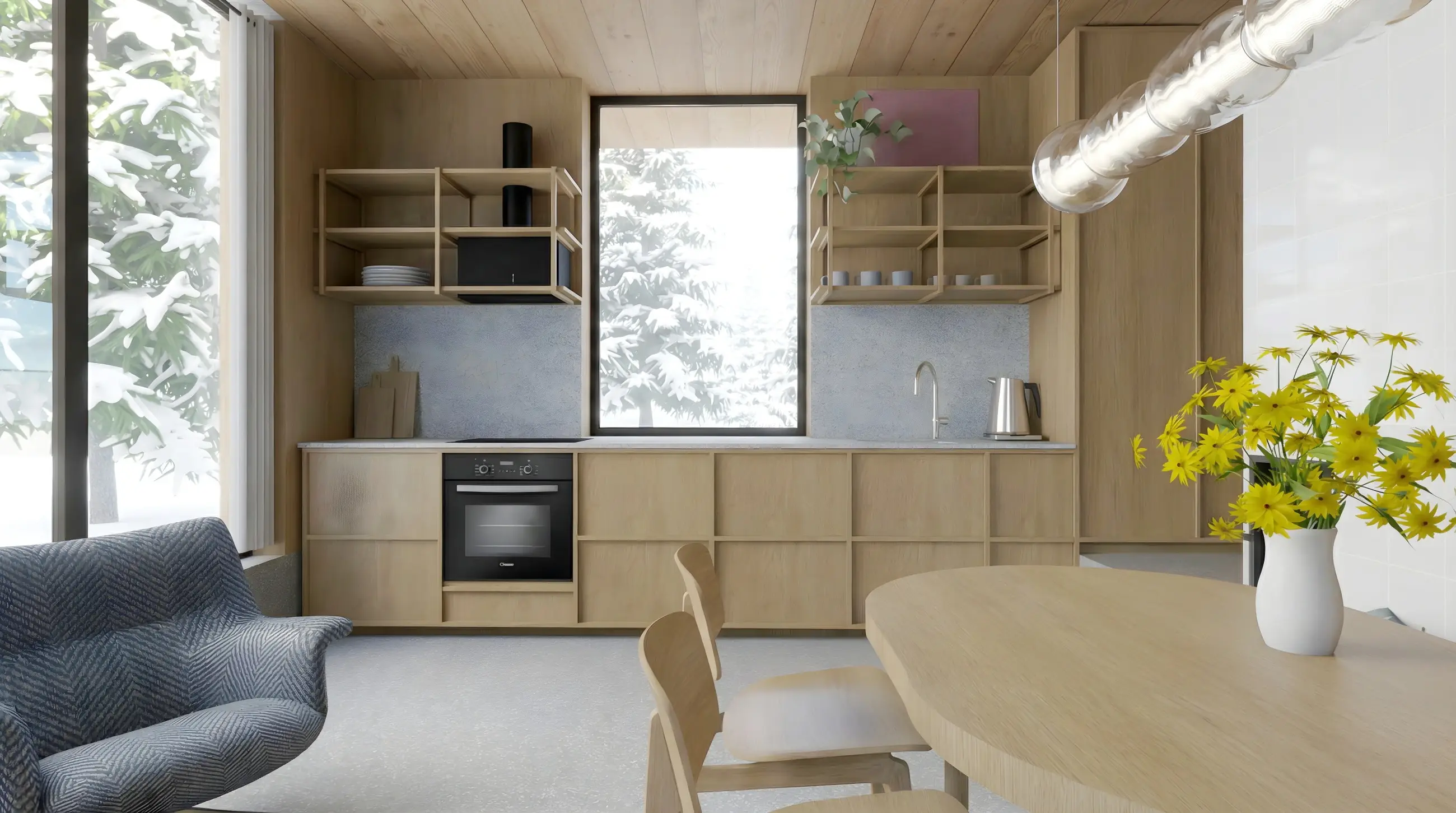
The garden deserves a chapter of its own. Surprisingly, the grounds are home to plant species that would not ordinarily be found in the Jizera Mountains. This unusual flora is the result of the original owners' efforts to establish a small botanical garden around the hunting lodge. We would like to restore the garden with care and sensitivity. But we have no intention of imposing an artificial order upon it. We want it to retain the character of a meadow in the Jizera Mountains. The surviving traces of the original introduced plants will remain as quiet reminders that this place has a long and layered history, one that should not be forgotten.
The story we are writing has no ending. We do not know where it will lead. What matters is that, together with our clients, we are building upon everything good that once existed here. We are bringing a remarkable place back to life, a place that, for many years to come, may become an expression of the coexistence of people and nature. A beacon of home in the harsh mountain climate. May mist, wind, and time be the only companions that shape the fate of this house. May it serve its people through the peaceful years ahead, and may it be spared the turbulent destiny that befell its predecessor.


