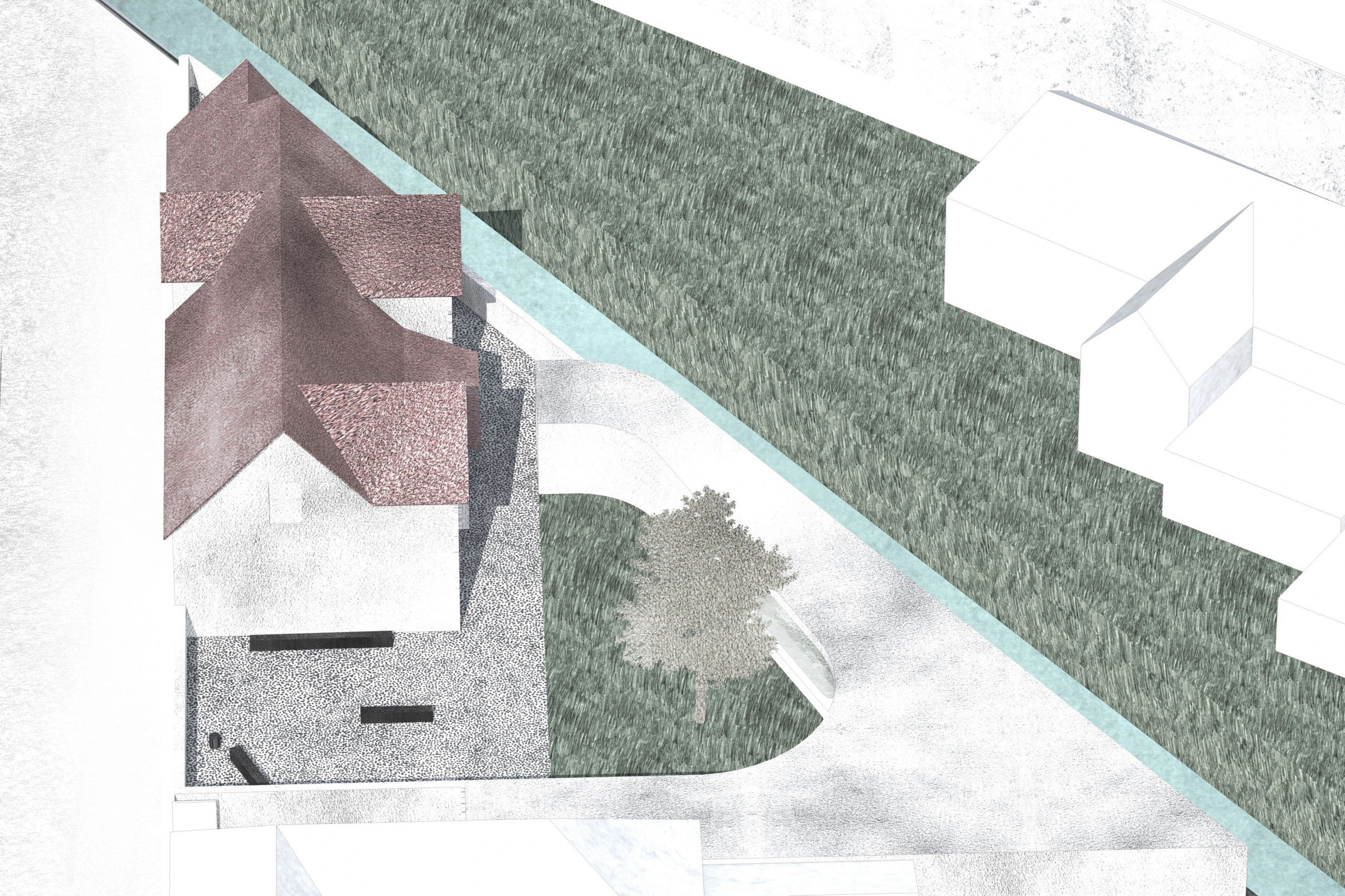
Jan Palach Memorial
The story of Jan Palach is an intimate story of an individual set against the backdrop of dramatic times. We approach the design of the Jan Palach Memorial in a dramaturgical manner, as an escalating story. Palach's birthplace itself becomes the landmark. By removing the interior walls and sealing off the windows, a single large space for the art installation is created. Working with light and space, we create an artwork that disorients the visitor's senses, stirring them to action and the realization of their personal responsibility. This is what we consider to be the greatest legacy of his courageous act.
Location:
Liberec, Lidové sady, Czech Republic
Client:
Statutory City of Liberec
Year of completion:
2025
Built-up area:
320 m²
Architects:
Jan Vondrák, Marek Nedelka, Jan Mach
Design engineer:
Mjölking s.r.o.
Contractor:
1ku1
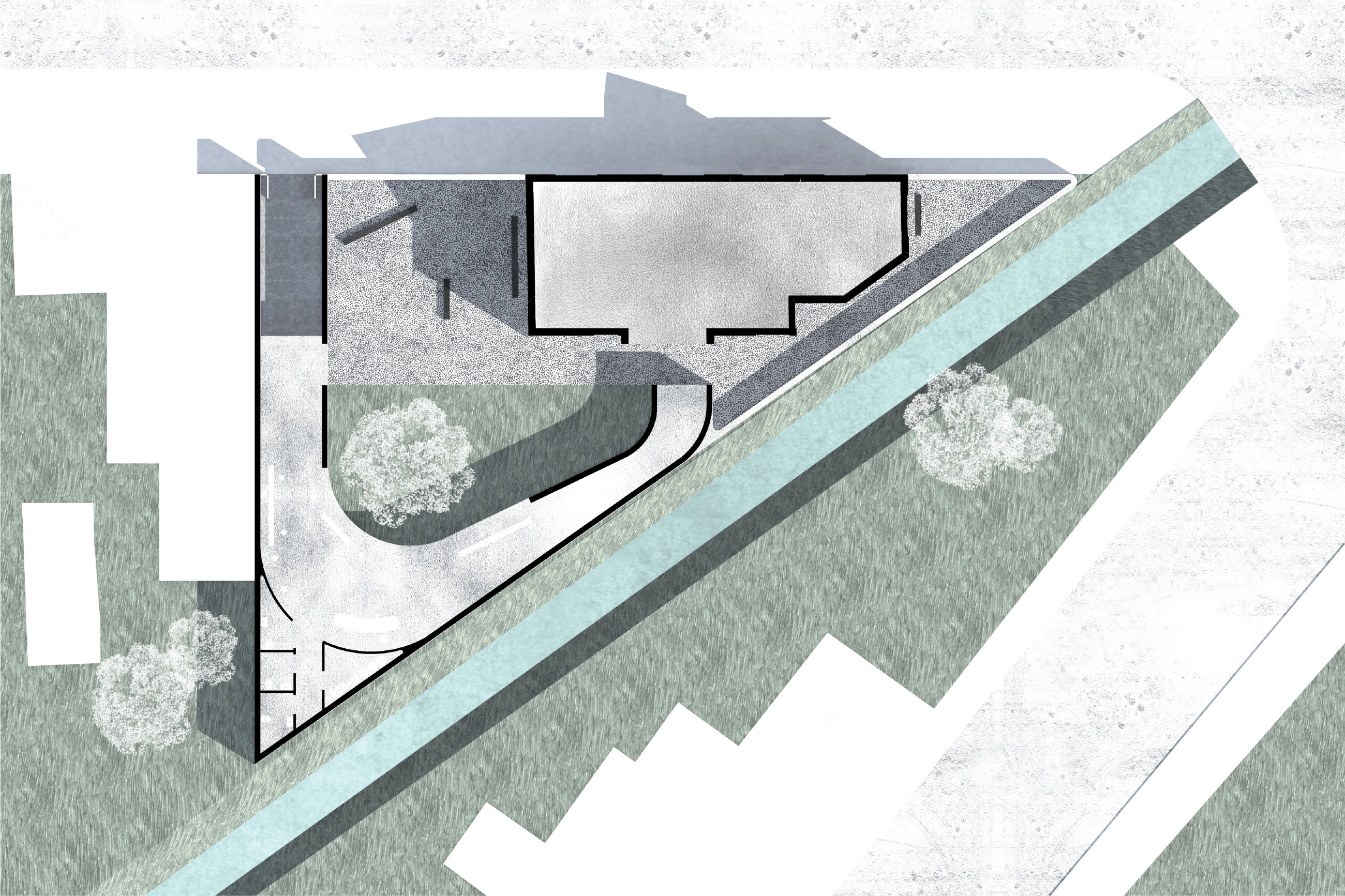
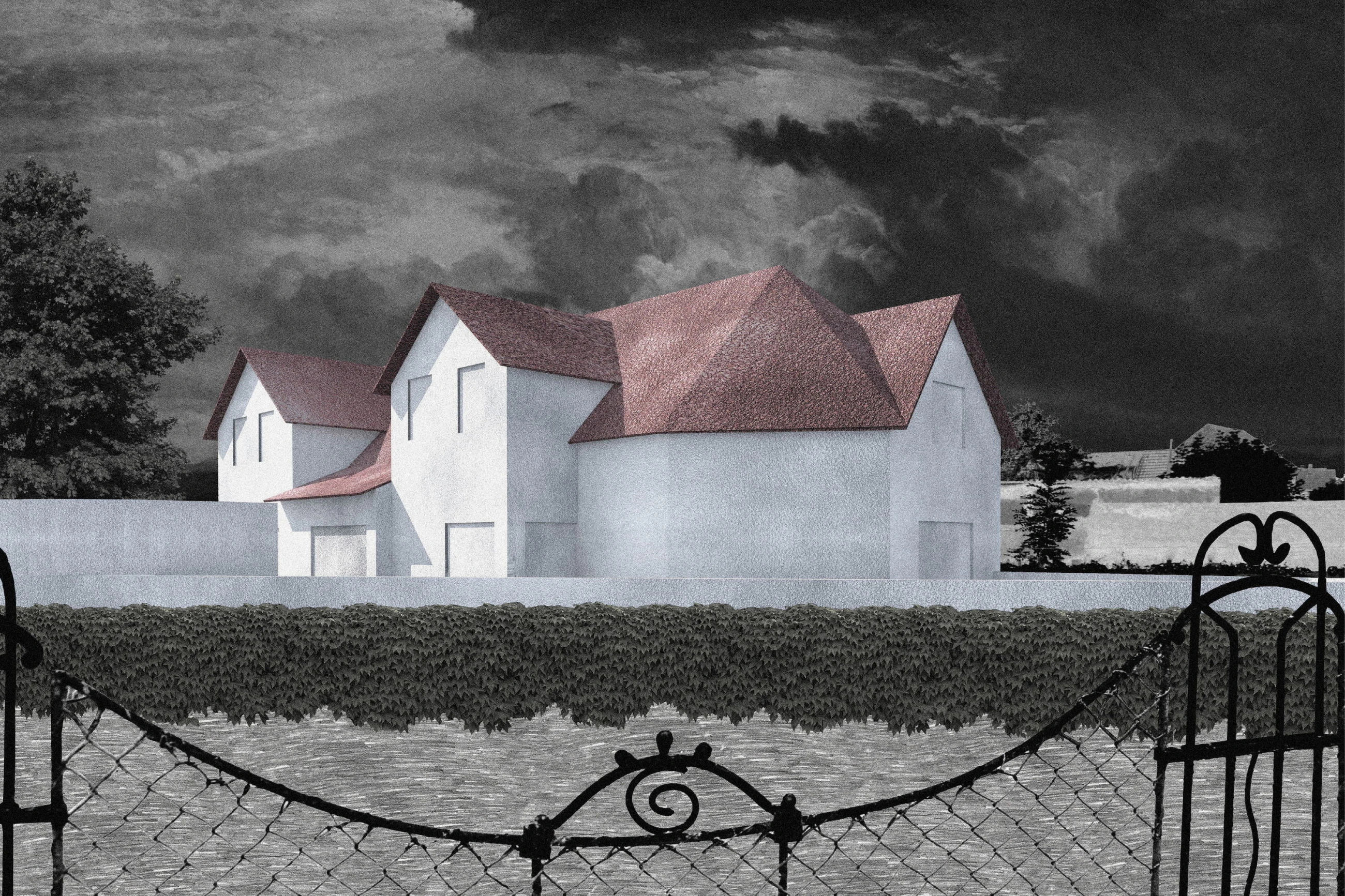
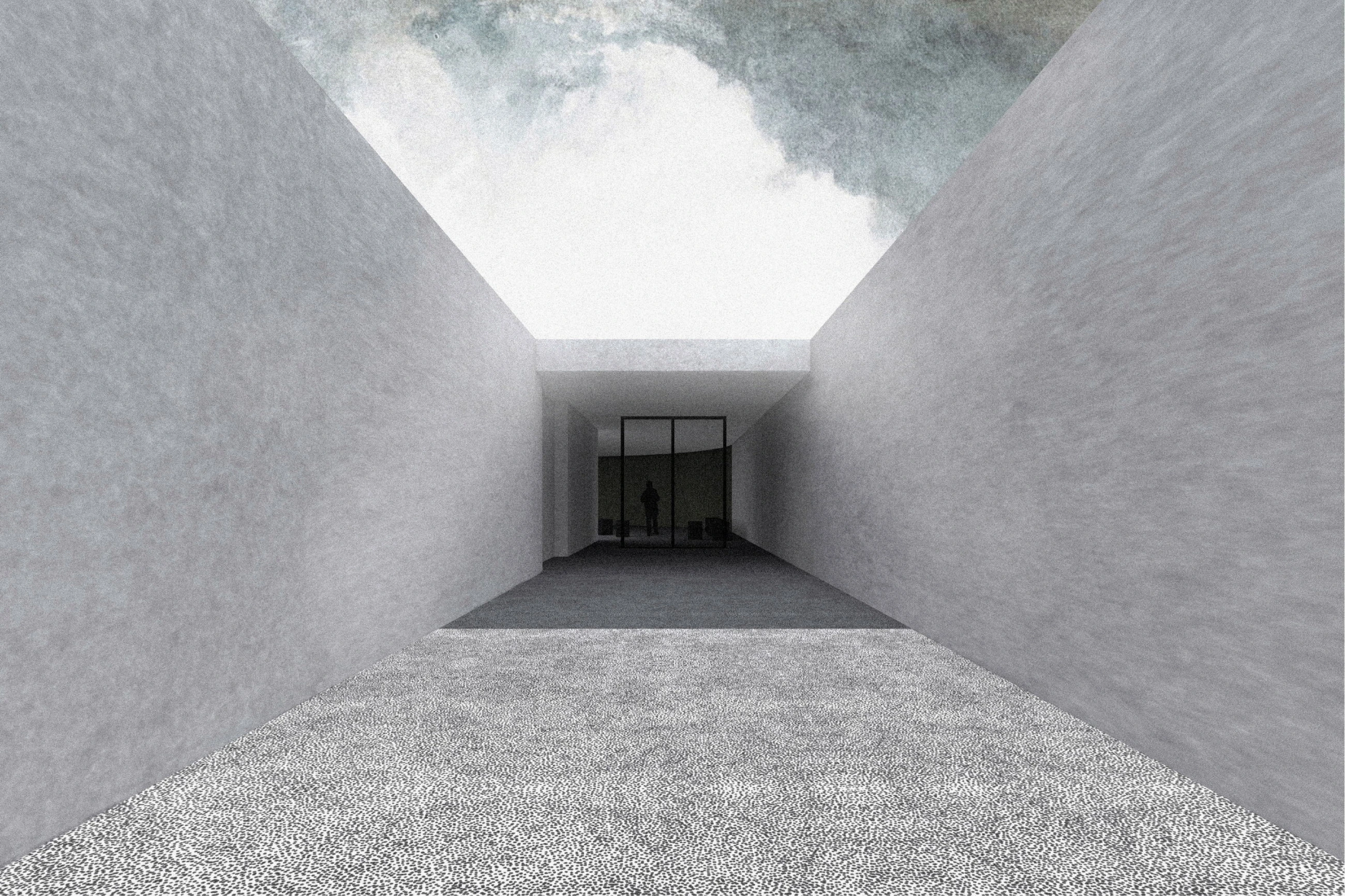
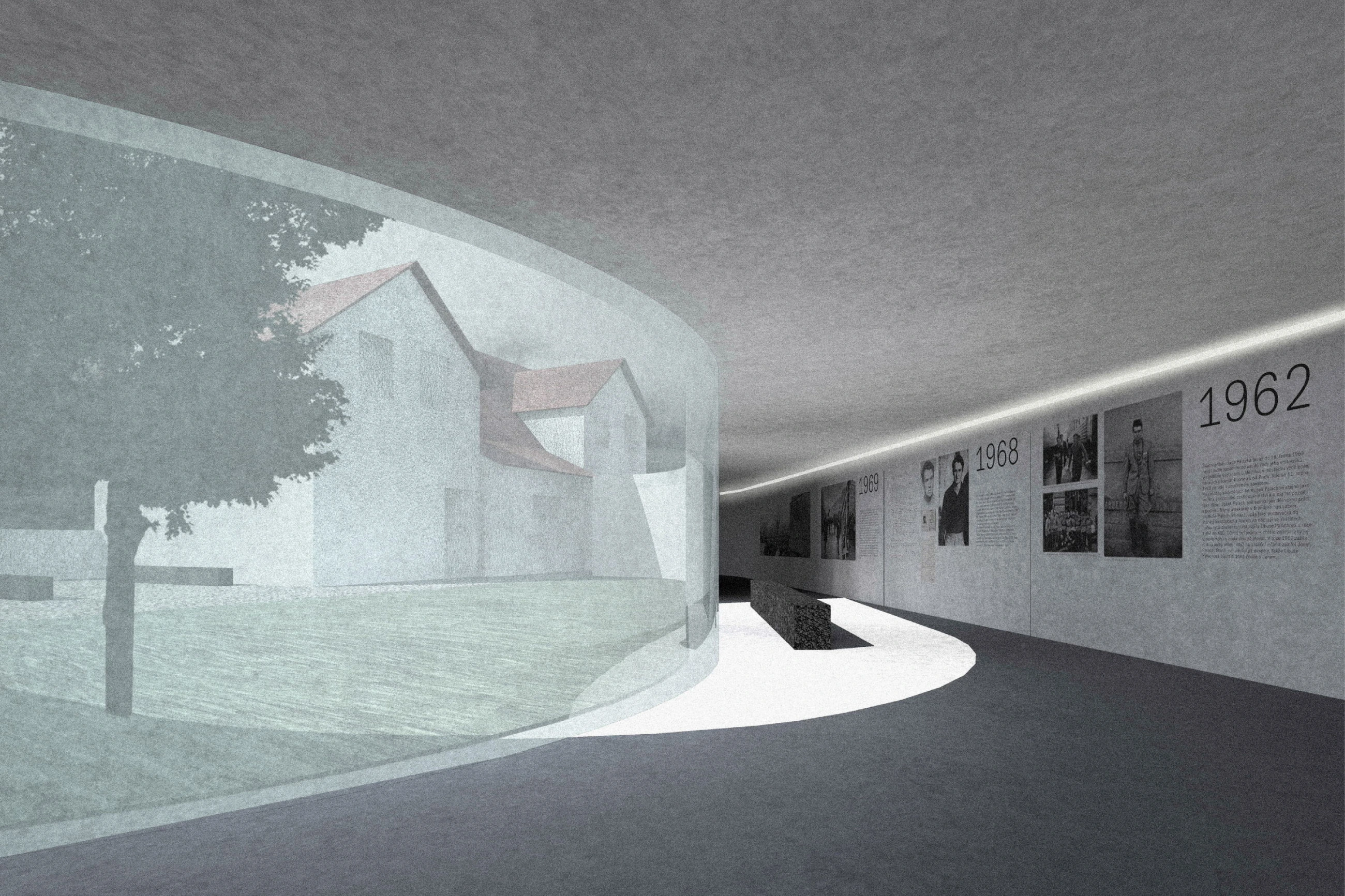
I took the early train to Všetaty. Autumn was well on its way, and my long summer break was coming to a close. I was about to start school in a week, studying history, just like he had. It was a strange feeling to travel the exact same route he used to take. Jakub had told me I would recognize the memorial the moment I saw it. The house seemed odd in a way, looking like an enormous plaster cast. It had no windows, only healed wounds where they used to be. I entered through a narrow corridor, losing sight of the house for a moment. In front of me, the wall took a slight curve, preventing me from seeing behind the bend. A few steps later, a view of the garden opened up. The wall on the right straightened into a line. Twenty meters of Palach's life. I walked close to the wall. I had to touch it. All the photographs and texts were printed directly onto the surface. It reminded me of how, in August of '68, he and his friends painted over the town’s walls with words of anger and disappointment. It might have been a trick of the eye, but the corridor seemed to be narrowing now. I thought I heard voices. I stopped and listened. It was a recording of a conversation with Jan Palach while he was in the hospital.
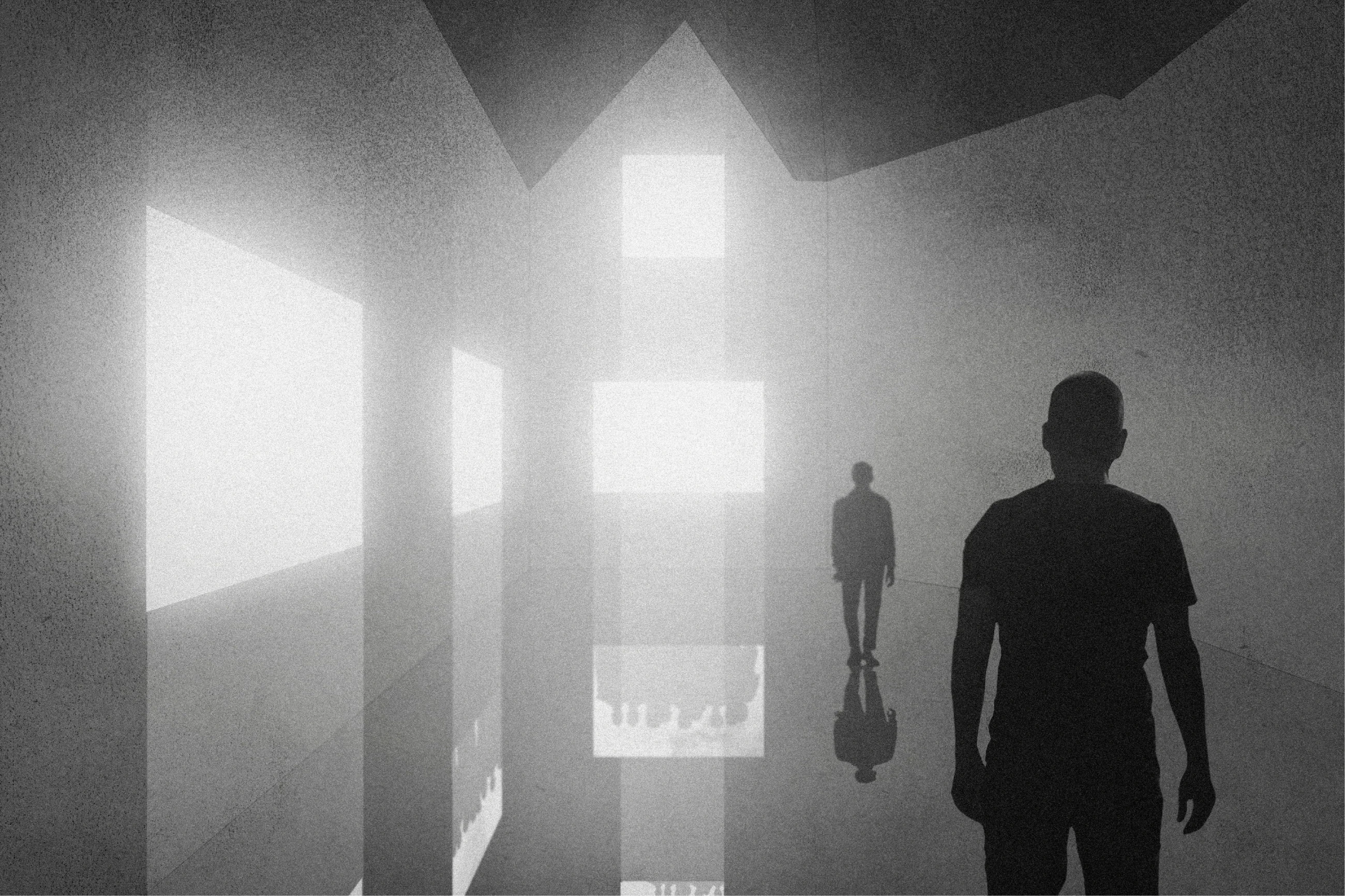
One could hear the sheer extent of his suffering. It felt so real, as if he were standing right next to me. I had no idea such a recording even existed. I stood in the narrowest part, which led outside again. I saw a tree and a large door. I pushed against the door. I recall the first few seconds: pitch blackness and total confusion. I couldn't grasp where I was or what was happening. Then, an intense light began streaming in from the outside, and I started to orient myself. Wait - windows? But they were walled up, and shouldn't the house have multiple levels? Nothing seemed as it should be. In the reflections of the windows on the floor, I could see silhouettes. Yet, when I looked back up, there was no one there. I felt as though I were in Plato's cave. I stayed there for a long time, consumed by a peculiar sensation of isolation.
I took the same door back outside. I had almost forgotten what the outside world looked like. I sat down in the garden and replayed the whole experience in my mind. What would Jan Palach be like today if he were still alive? I wondered. What would he have to say about these times?
The Memorial Concept
Conceived as an escalating narrative, the memorial is divided into distinct components: the existing house, a new pavilion, and a garden. Visitors walk through these consecutive spaces, which gradually intensifies their experience. A low wall surrounds the site, with the main entrance leading from Smetanova Street. Upon entering, visitors immediately find themselves on the pathway towards the new pavilion.
The Pavilion
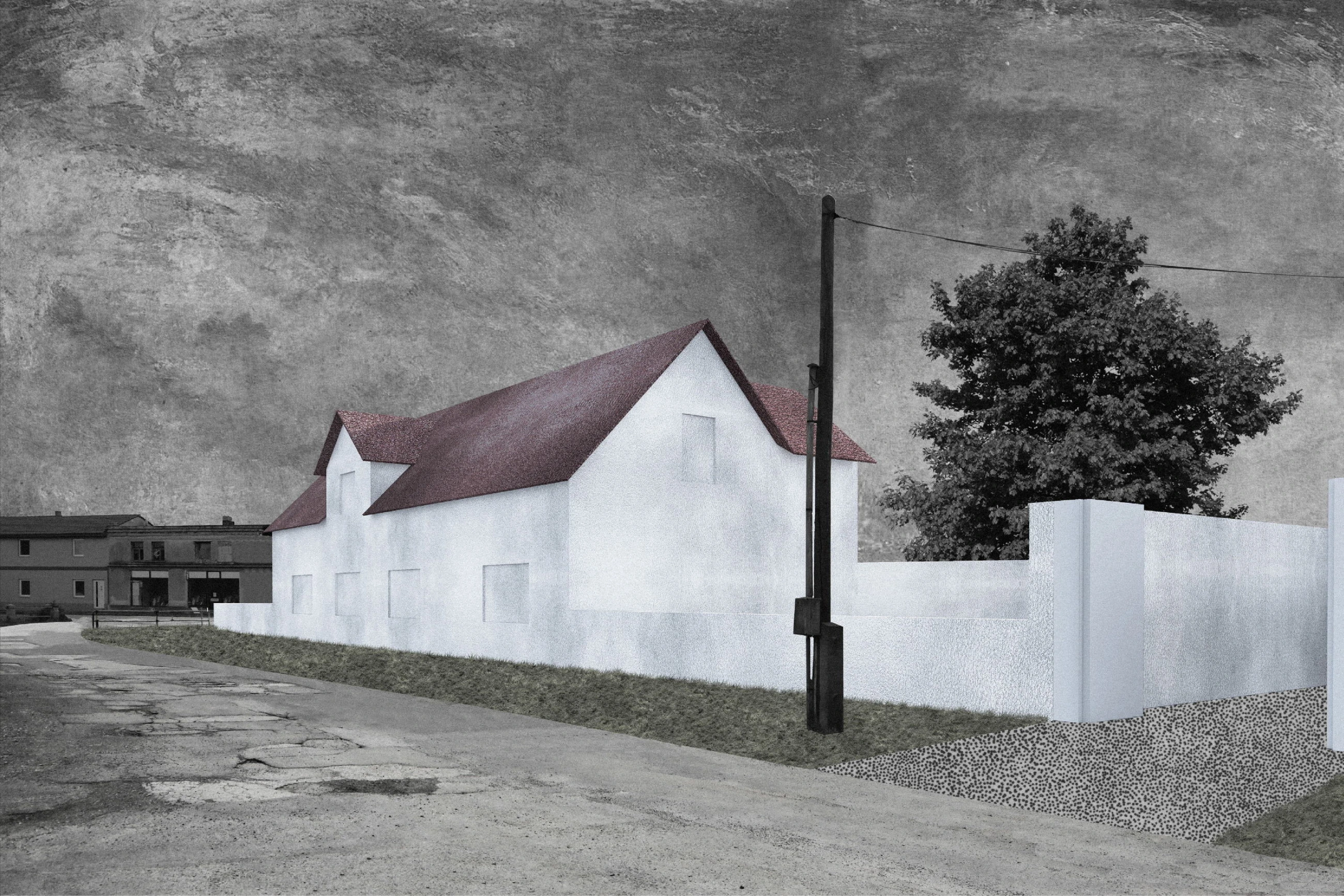
The pavilion is located on the footprint of the original shed. Initial thoughts on the nature of the pavilion as a physical timeline gave shape to the building: a curved line that embraces the garden and opens up into it. It signifies Jan Palach's short yet intense life on two levels. The first level captures his personal life through photographs, diary entries, and personal testimonies. The second level reflects the social developments and political turbulence that ultimately led to his tragic end. The gradation towards 1969 is emphasized by the gradual narrowing of the space, ending with an audio loop of Jan Palach's last words recorded at the hospital.
The House
Leaving the pavilion, the visitor stands before the house. Above the entrance is a quote they have just heard Jan Palach speak in the recording: "One must oppose the evil that he has the strength to oppose." We understand this sentence as the essential memento, a direct challenge to action and the realization of one's personal responsibility. On the outside, the house resembles a plaster cast. The windows are walled up, radically separating the exterior from the interior. This heightens the experience of the building's core. Upon stepping inside, the visitor is met with a surprise: all interior partitions and floors have been completely removed. The space is cleansed, evoking an almost sacral quality. An installation is created through space and light. All surfaces are unified in a deep black color. Screens stripped of their polarizing filters are placed where the windows used to be. This creates the illusion of an unnaturally intense light coming from the outside that cannot be seen through directly. However, looking down at the reflections on the floor, refraction and polarization reveal the silhouettes of people in the windows. The installation evokes sensory confusion, uncertainty, and a shattering of everyday reality, while symbolizing isolation and solitude in a world beyond the curtain.
The Garden
Visitors exit Jan Palach's house carrying a multitude of thoughts and questions. They find peace, quiet, and a place for quiet contemplation in the garden. In the grassy lawn surrounding the pavilion, a linden tree, the national tree of the Czech Republic, is planted.